Iceland in October: Making the Most of Shrinking Daylight
Published
Daylight shrinks fast in Iceland come October. Stefanía shows you how to plan your days, drives, and aurora hunts around it.

By the time October arrives, Icelanders have already started mentally preparing. The long bright summers make you forget, every single year, just how quickly the dark comes back. Then one morning you wake up, it is half past eight, and the sky outside is still the colour of cold coffee. October is that month.
If you are visiting Iceland in October for the first time, the shrinking daylight is probably the thing you are least prepared for — and the thing that will most affect your trip if you ignore it. This is not a complaint. October here is genuinely good: the tourist crowds have thinned, the autumn colours on the heathlands are still going (just), the aurora season is properly underway, and the air has that sharp clarity that summer never quite manages. But you do need to plan around the light. Not against it. Around it.
How fast the daylight actually disappears
At the very start of October, Reykjavík sees roughly eleven to twelve hours of daylight. By the end of the month, that has dropped to around eight hours. That sounds gradual written down, but it does not feel gradual when you are living it — or visiting. The sun rises later each day and sets earlier, and because Iceland sits so far north, the sun does not climb high in the sky the way it does further south. Even at midday in late October, the light has a low, golden quality. Shadows are long by two in the afternoon.
The further east or north you travel, the more pronounced this becomes. Akureyri, up in the north, loses light slightly faster than Reykjavík. The east fjords feel dark early because the mountains block what afternoon sun there is. This matters if you are planning to drive the Ring Road.
Sunrise in Reykjavík on the 1st of October is around 7:30 in the morning. Sunset is around 19:00. By the 31st, you are looking at a sunrise closer to 8:30 and sunset just after 17:00. That is your working window. Plan accordingly.
Related experiences


Structuring your driving days so you are not navigating in the dark
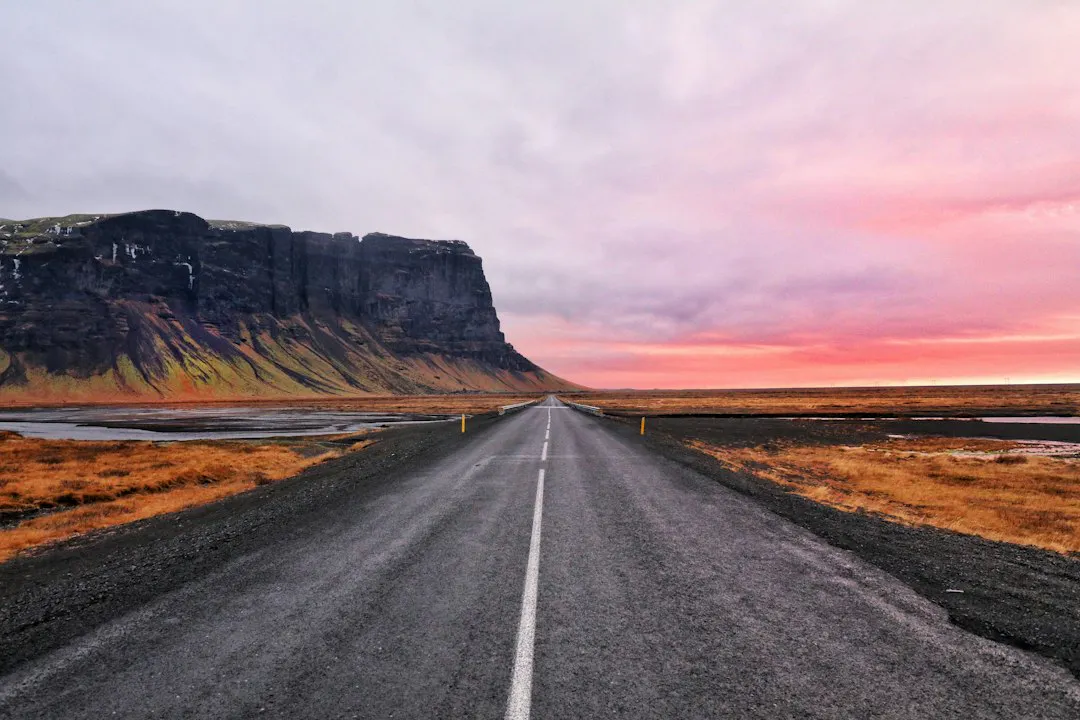
This is where most October visitors go wrong. They book accommodation based on distance alone, without accounting for how early it gets dark. You leave Reykjavík at ten, stop at Seljalandsfoss and Skógafoss, have a slow lunch somewhere near Vík, and suddenly it is half past four, the sun is setting, and you still have an hour of driving to your guesthouse in the east. Now you are on an unfamiliar road in the dark. In October this can mean weather that was not in the forecast, black ice that was not there that morning, and road conditions that are simply harder to read.
My rule: finish your driving by four o'clock at the latest. Book your accommodation closer to your departure point than you think you need to. And if you are doing the south coast — Þórsmörk, Reynisfjara, the glacier lagoon at Jökulsárlón — do it in stages over multiple days rather than trying to rush it in one long push.
Pro Tip: The Icelandic Road and Coastal Administration website (road.is) has live road condition updates. Check it every morning before you drive. In October, F-roads are typically closed or closing, and highland routes should not be attempted without checking first. Some will already be shut.
Start early. Honestly, if you can be at your first stop by nine in the morning, you will be ahead of other visitors and you will have the best of the light. That golden, low October sun hitting a waterfall at nine-thirty in the morning is genuinely worth setting an alarm for.
The aurora question everyone is actually asking
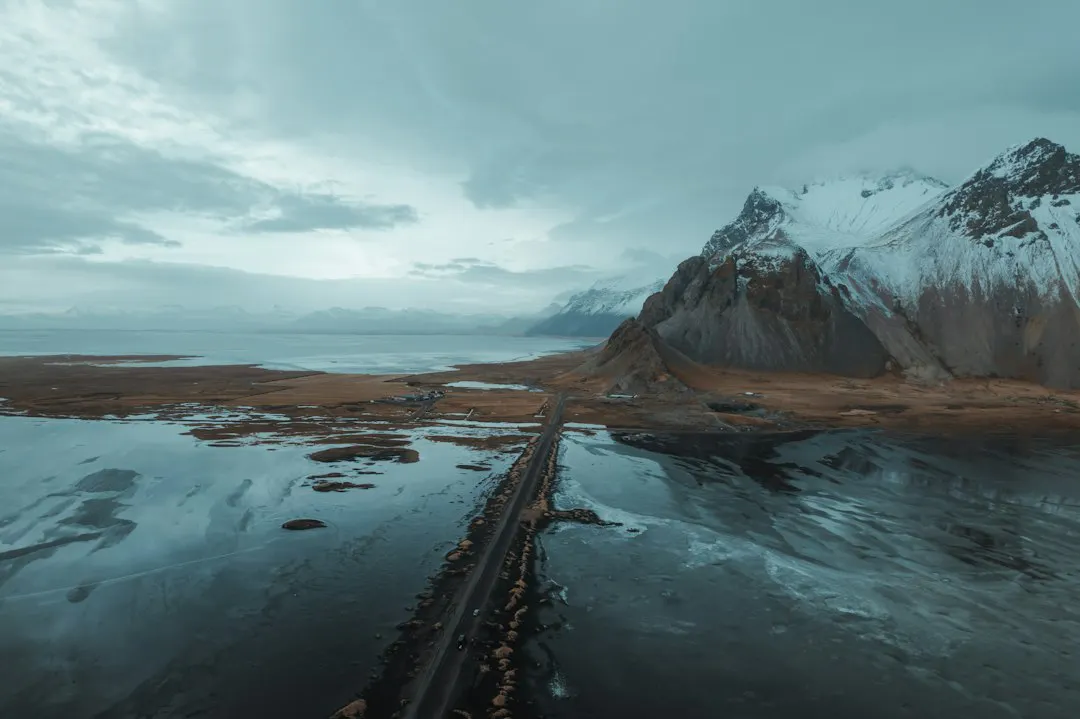
Yes, October is a good month for the northern lights in Iceland. You need darkness and clear skies, and October provides both — in increasing quantities as the month goes on. The aurora itself does not care what month it is; what changes is how long the sky is dark enough to see it. By mid-October you are getting real darkness by around seven in the evening, which gives you a solid viewing window before most people's bedtimes.
Clear skies are the harder variable. October weather in Iceland is changeable in a way that requires patience. We can have four beautiful clear nights in a row, then a week of cloud and wind. The Icelandic Meteorological Office (vedur.is) publishes aurora forecasts alongside cloud cover forecasts — check both, not just the aurora activity index. A Kp index of 3 means nothing if there is cloud from horizon to horizon.
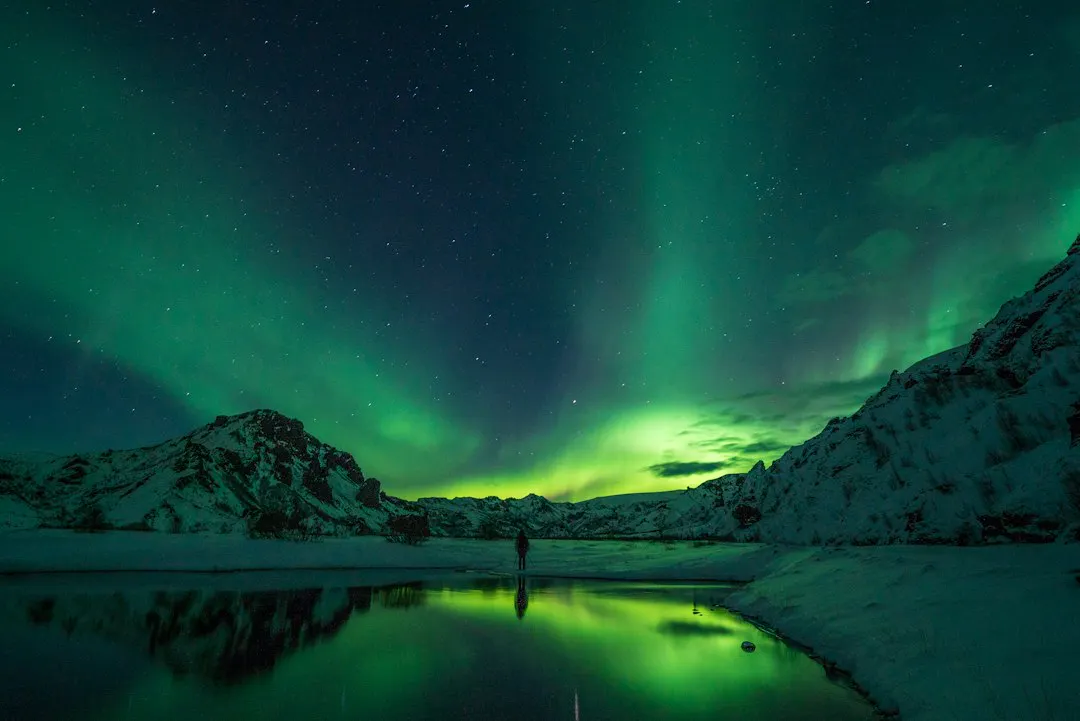
Getting away from Reykjavík's light pollution makes a real difference. You do not need to drive far — even heading out along the Reykjanes peninsula or north towards Þingvellir gets you away from the worst of it. Þingvellir national park on a clear October night, standing by Öxará river with the rift valley dark around you and the lights moving overhead — I have done that more times than I can count and it does not get ordinary.
If you would rather not drive yourself in the dark hunting forecasts on your phone, we run aurora tours from Reykjavík through QR Travel that take care of the forecast-watching and the driving. The guides know which spots are clearest on any given night and will often take you somewhere you would not have thought to go yourself.
What to actually do with the short daylight hours
Eight to eleven hours sounds like less than it is, if you use them well. The key is front-loading your outdoor time. Waterfalls, glacier walks, coastal paths — all of this in the morning and early afternoon. Save towns, cafés, geothermal pools, and museum visits for late afternoon when the light is gone anyway.
October is one of my favourite months to visit the Blue Lagoon or any of the geothermal baths, actually. You slide into the water as it gets dark, steam rising, and if the sky is clear the aurora can appear right above you. The new Sky Lagoon, just outside Reykjavík at Kársnes harbour in Kópavogur, has that infinity edge looking out over the ocean — on a clear October evening it is genuinely something.
For glacier experiences, go early in the day. On the south coast, our glacier hike at Sólheimajökull with QR Travel runs in the morning for exactly this reason — you get the best light on the ice and you are done and driving before the afternoon closes in. Sólheimajökull is accessible and the hike is suitable for people without prior glacier experience, which matters when you are trying to make the most of limited daylight and do not want to spend half of it on a difficult approach.
Waterfalls along the south coast — Seljalandsfoss, where you can walk behind the water, and Skógafoss just down the road — are both accessible and dramatic in October. The crowds are thinner than in summer, which is a real relief. October weekday mornings, you might have Seljalandsfoss almost to yourself for a few minutes. Almost.
Packing and dressing for October light and October weather
The light being low and the weather being October Icelandic means you need to dress for both. Layers are not optional. Wind can be biting on the coast even when it looks calm from inside your car, and the temperature can drop several degrees in the time it takes you to walk from a car park to a viewpoint and back.
Waterproof outer layers on top and bottom. Warm mid-layers — fleece or down. A hat that actually covers your ears, not a decorative beanie. Gloves. Decent walking boots that are already broken in, not new ones you bought at the airport. I am being specific because every October I watch tourists in October standing at Reynisfjara in trainers and a rain jacket, and they are cold and miserable within ten minutes.
For aurora hunting specifically, standing still in the dark on an October night in Iceland requires more warmth than walking in the same conditions. Bring hand warmers if you run cold. Bring a flask of something hot. The waiting is part of it.
Pro Tip: Pharmacies and outdoor shops in Reykjavík (Útilíf on Laugavegur is a good one) sell good quality gear if you have underpacked. Do not rely on airport shops — the selection is limited and the prices are higher.
A note on driving after dark
I want to be honest about this because rental car companies will not always tell you. Driving in Iceland after dark in October is manageable, but it requires more concentration than driving in summer. Road markings can be harder to read. Animals — particularly sheep, which are being brought down from the highlands in October during réttir, the traditional sheep round-up — can appear on roads without warning. Headlights are mandatory at all times in Iceland regardless of conditions, so make sure yours are on.
If your rental car has a GPS, use it. If it does not, download the maps you need before you leave wifi. Mobile signal is good on the main roads around the Ring Road but not everywhere, and you do not want to be navigating blind on an unfamiliar road after sunset.
One more thing: fill your petrol tank whenever you see a station. Gaps between stations get longer as you leave the south coast heading east, and in October some smaller stations keep shorter hours.
October in Iceland asks a little more of you than June does. The planning matters more, the flexibility matters more, and your willingness to change plans based on weather and light matters most of all. But the visitors who manage it well tend to say it is one of the best months they could have chosen. I am biased, obviously — I live here and I love it in every season. But I do not think they are wrong.
If you want help building an October itinerary that actually works with the light rather than fighting it, take a look at what we offer at QR Travel. Drop us a message with your dates and we can talk through options — whether that is a guided day on the south coast, an aurora tour, or just some honest advice about how to structure your own self-drive trip.

