Glacier Hiking in Iceland: Your Autumn Starter Guide
Published
Óðinn breaks down what actually happens on your first glacier walk—gear, guides, and why autumn is the move.

The first time I stepped onto a glacier, I was nineteen and absolutely underdressed. My cousin had told me it would be fine. My cousin was wrong. I had trainers on, no gloves, and approximately zero understanding of what crampons were. The guide took one look at me and handed me a spare pair of gaiters without saying a word. That silence said everything.
I've been on glaciers probably two hundred times since then, working as a guide and dragging tourists across ice in every season. Autumn is the one I keep coming back to. Not because it's the easiest — it's not — but because September through November sits in this specific window where the summer crowds are gone, the ice is still walkable, and the first ice caves of the season are starting to open up inside Vatnajökull. It's the shoulder season in name only. In practice, it's when things get genuinely interesting.
This post is for people who have never stood on a glacier before and want to do it properly. I'm going to tell you what to book, what to wear, and what nobody bothers to warn you about.
Vatnajökull vs. Sólheimajökull — Pick Your Glacier
These are the two glaciers you'll see on every tour website, and they are not interchangeable. They're completely different experiences, different landscapes, different logistics. Let me be direct about which one is which.
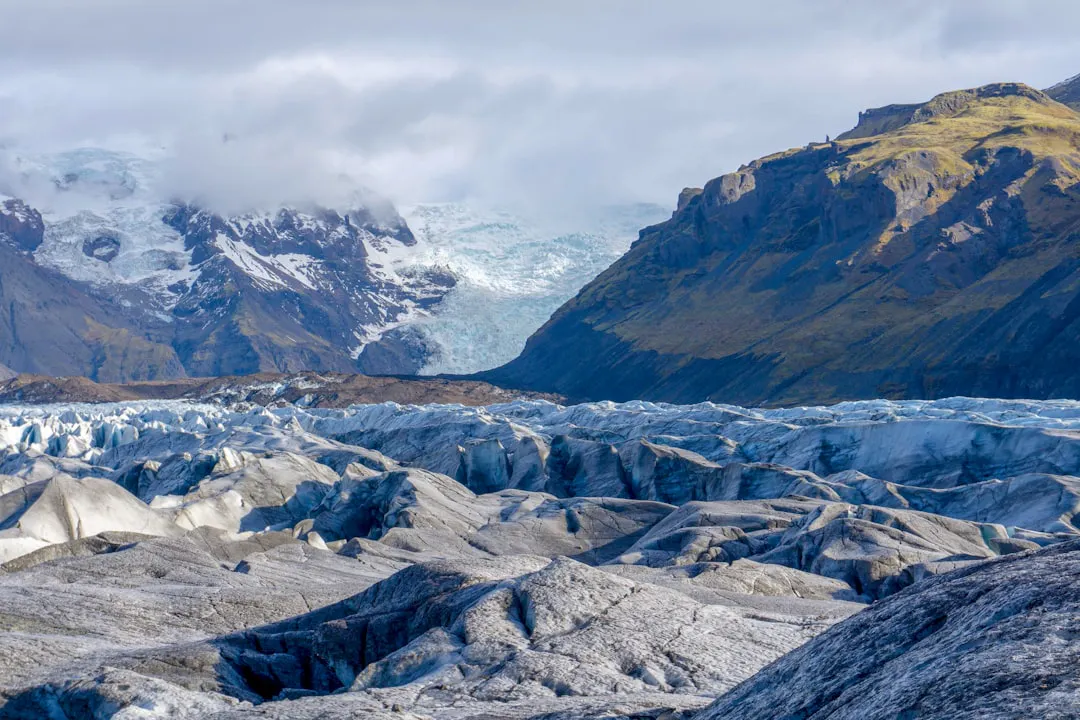
Sólheimajökull is the accessible one. It's an outlet glacier of Mýrdalsjökull, sitting about 180 km from Reykjavík on the Ring Road — roughly a two-hour drive. You park, walk fifteen minutes across glacial moraine, and you're on the ice. Because of that easy access, it's where most beginner hikes happen, and there's a reason for that: the terrain is genuinely good for learning how to use crampons and ice axes without immediately putting you somewhere terrifying. Tours typically run two to three hours on the ice itself. The glacier is also visibly retreating, which is confronting in a way that no amount of reading about climate change really prepares you for. The black ash layers running through the ice are from Katla eruptions — Katla sits directly beneath Mýrdalsjökull, and those dark bands are real geological history you can touch.
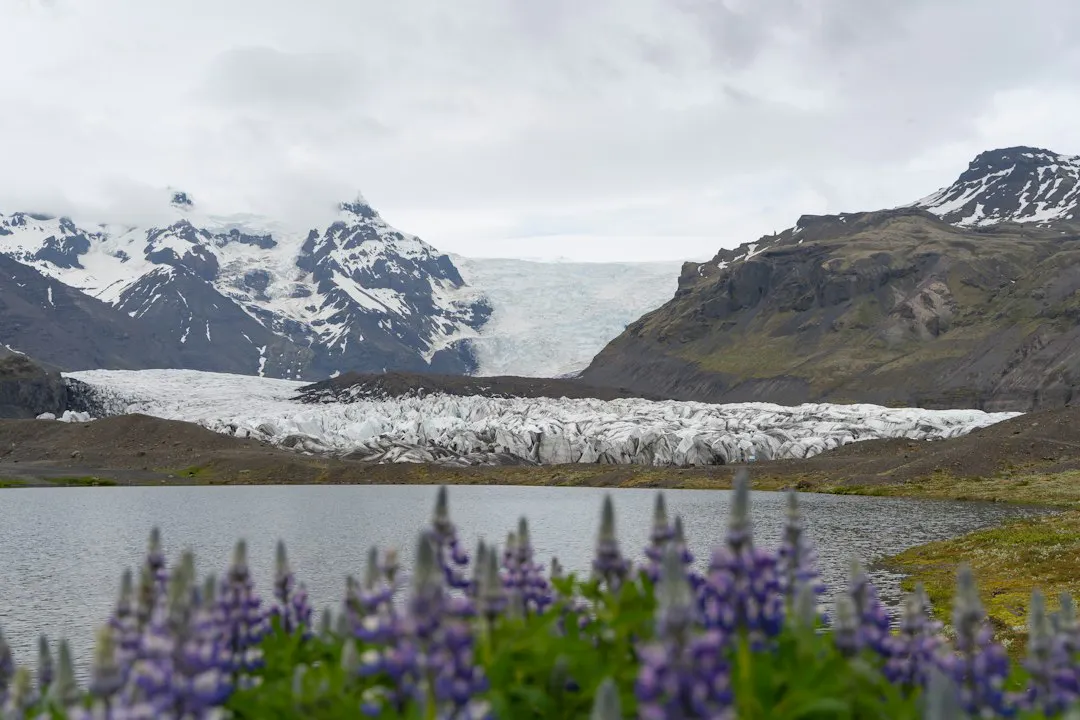
Vatnajökull is different in almost every way. It's the largest glacier in Europe by volume, covering roughly 8% of Iceland's total land area. The outlet glaciers that flow down from it — Skaftafellsjökull, Svínafellsjökull, Falljökull, and others — each have their own character. Getting there means driving to Skaftafell inside Vatnajökull National Park, which is around 320 km from Reykjavík. That's a proper journey. But the scale of what you're looking at when you arrive is something Sólheimajökull simply cannot match. The ice is bigger, bluer in places, and the surrounding peaks of the Öræfajökull volcano make the whole scene feel genuinely remote.
Pro Tip: If you're based in Reykjavík and you only have one day, Sólheimajökull is the practical choice. If you're road-tripping the Ring Road and stopping in the south-east, Vatnajökull's outlet glaciers are worth building your schedule around. Don't try to do both in a single day — I've seen people attempt it and they spend the whole hike exhausted and distracted.
Related experiences


What 'Beginner-Friendly' Actually Means
Look, I know the brochure says 'moderate difficulty.' The brochure is lying. Not maliciously, but it's written by someone who walks on ice every day and has forgotten what it's like to put on crampons for the first time and immediately slip sideways on a flat surface.
A beginner glacier hike involves real physical effort. You are walking uphill on uneven ice with metal spikes strapped to your boots, sometimes holding an ice axe you have no instinct for yet, with a guide telling you to kick your front points in and trust them. If you have any knee or ankle issues, mention them before you book — not as you're putting your crampons on. The guides need to know.
That said, the first thirty minutes are the learning curve. Most people find their footing, figure out the rhythm of crampon walking, and then genuinely start having a good time. The technique isn't complicated once your body understands it. Short steps. Flat-footed where possible. Don't look down the whole time.
Age range on beginner hikes is usually around eight to sixty-five, though this varies by operator. Children need to be old enough to follow safety instructions immediately and without argument. The ice doesn't wait for a second explanation.
What to Wear — And What to Leave at the Hotel
Autumn temperatures on Sólheimajökull can range from just above freezing to genuinely cold with wind chill factored in, and the weather can shift fast. I cannot stress enough that being underdressed is not a personality trait — it's a way to cut your hike short and ruin someone else's day.
Base layer: merino wool or synthetic thermal. Not cotton. Cotton holds moisture and will make you miserable within an hour. Mid layer: a fleece or down jacket you can zip up fully. Outer layer: a waterproof shell jacket and waterproof trousers. Not water-resistant. Waterproof. There's a difference, and Icelandic autumn will find it.
Hands and head matter more than people expect. Waterproof gloves, not just warm ones. A hat that covers your ears. Buff or neck gaiter. You are going to be standing still at points while the guide explains something, and that's when the cold finds you.
Footwear: most reputable tour operators provide crampons and will have you wear them over your own boots. You need ankle-supporting waterproof hiking boots — not trail runners, not fashion boots, not wellies. If you don't have them, ask your operator in advance whether they rent boots, because some do.
Pro Tip: Pack a small dry bag or ziplock for your phone. Glaciers are wet. Meltwater runs across the surface constantly, even in autumn, and you will want your phone for photos at the worst possible moment.
Autumn Timing and the Ice Cave Connection
Here's the part that makes autumn genuinely worth choosing over summer, beyond the crowd reduction. Ice caves.
The natural ice caves inside Vatnajökull — carved by geothermal activity and meltwater moving beneath the glacier — are generally only accessible from around November through March. The ice has to be cold and stable enough to be safe. Autumn is the run-up to that season, which means two things: the glacier hiking is still fully operational, and the ice cave tours are starting to open up, usually from mid to late October depending on conditions that year.
If you're visiting in October, you may be able to book both a glacier hike and an ice cave tour in the same trip to Vatnajökull. That's the combination. A morning on the surface, an afternoon going underneath it. We run a glacier hike from Skaftafell that covers Svínafellsjökull and gives you a proper grounding in glacier travel before you go underground — and pairing it with an ice cave tour through QR Travel means you're not juggling two separate operators with two separate meeting points.
September is reliably good for surface hiking. October is the transition month — ice caves may or may not be open depending on the specific autumn. November is when the cave season is usually established, but daylight hours are shorter and weather is less predictable. None of this should put you off. It should just inform when you book and what your backup plan is if conditions change.
Pro Tip: Ice cave tours run on current conditions, not fixed schedules. Guides make go/no-go decisions on the morning of the tour. Book with operators who offer a reschedule or refund policy for weather and safety cancellations — any legitimate company will have one.
Booking a Guide — This Is Not Optional
I want to be clear about this because every year someone tries to walk onto a glacier without a guide and it ends badly.
Glaciers have crevasses. Crevasses are cracks in the ice that can be partially hidden by snow bridges — they look like solid ground and they are not. Without training and without knowing the specific glacier you're on, you cannot reliably identify them. Guides walk these routes constantly. They know where the safe lines are and they update that knowledge as the glacier changes, which it does. Every week. Every season.
This isn't a liability disclaimer. This is just how it works. Book a guide.
When you're looking at operators, check that guides are certified by the Icelandic Mountain Guides association or have equivalent credentials. Group sizes matter too — smaller groups mean your guide can actually watch what everyone is doing. For a beginner hike, I'd be uncomfortable in a group larger than ten or twelve. QR Travel's glacier hikes on Sólheimajökull keep group sizes manageable for exactly this reason, and the guides there know that glacier's current conditions better than anyone writing a blog post from Reykjavík does.
Before You Show Up
A few things that will make your day run better and that nobody puts in the confirmation email.
Eat before you go. Not a massive meal, but don't show up fasted. You're going to be cold and moving, and your body will thank you for having something in it. Bring a snack in your pack — a chocolate bar or some dried fruit. Water too. You don't feel thirsty in the cold but you still need to drink.
Arrive at the meeting point early enough to get your gear sorted without rushing. If crampons are being fitted, that takes time, and doing it in a panic because you were late is a bad start to the day.
Leave the big camera backpack at the car unless you're a working photographer. A small daypack with your layers, water, snack, and phone is all you need. The ice isn't going anywhere in the three hours you're on it.
Finally — and this is the one people are most reluctant to hear — if the conditions are off and your guide makes a call to shorten the route or turn around, don't argue. I've been that guide. The mountain doesn't care about your itinerary.
Come for the autumn. Bring the right jacket. Book someone who knows the ice. I'll see you out there.

