Landmannalaugar in September: Your Last Real Chance
Stefanía on why September is the best — and last — month to reach Iceland's rhyolite highlands before the F-roads close for winter.

Every year, usually sometime in mid-October, my phone lights up with the same kind of message. It's someone who has just landed in Reykjavík, rental car keys in hand, asking if they can still drive to Landmannalaugar. And every year I have to tell them: no, probably not. The F-roads are closed. The highland bus has made its last run. The season is over, and the interior has sealed itself shut for another winter.
So if you are reading this and you have a September 2026 trip taking shape, listen carefully. What I am about to tell you is genuinely time-sensitive.
Why September Exists in Its Own Category
Most people think of Iceland in two modes: the summer rush and the winter aurora chase. September sits in a narrow gap between the two, and for Landmannalaugar specifically, that gap is everything. The highland interior — what we call the hálendið — is only accessible when the mountain roads are free of snow and the river crossings are safe to navigate. That window opens in late June or early July, depending on the year, and it closes again in September or October. There is no fixed date. It depends on weather, snowfall, and the condition of the roads.
What September gives you that July and August do not: fewer people on the trails, cooler and more comfortable hiking temperatures, and the beginnings of autumn colour on the low shrubs and grasses. The green mosses start to go gold and rust at the edges. The sky does things it simply does not do in midsummer — actual proper dusk, proper darkness at night, and if you are camping, a reasonable chance of seeing the northern lights from the Landmannalaugar campsite.
What September takes away: reliability. The weather in the highlands is not gentle at this time of year. A storm can roll in fast. Snow can fall on the peaks overnight and change road conditions by morning. You are not here to gamble; you are here to plan carefully and leave yourself room to adapt.
Related experiences


Getting There — This Is the Part Nobody Warns You About
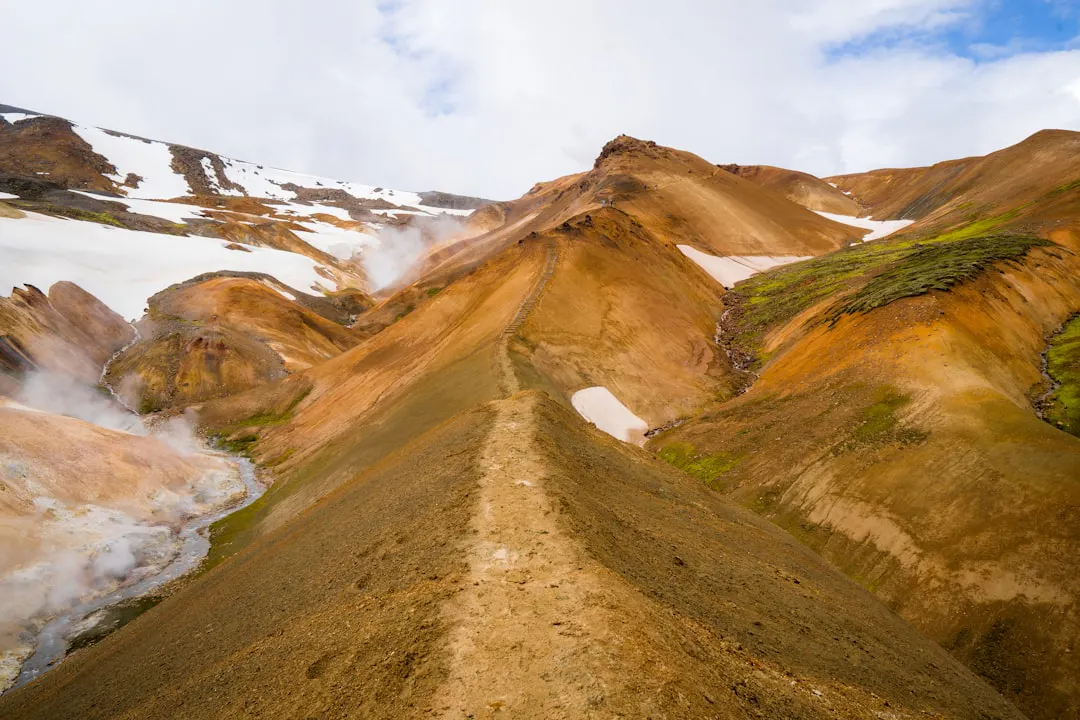
Let me be direct: getting to Landmannalaugar is not simple, and the options narrow as the season closes.
The reserve sits in the Fjallabak Nature Reserve, roughly in the centre of the country. The most common approach from Reykjavík is Route 26 east from Selfoss, then onto the F26 (Sprengisandur route) or the F208 (the Fjallabak route). Both are F-roads — meaning mountain tracks that are only legal for four-wheel-drive vehicles with high clearance. A regular rental car is not allowed on F-roads. This is not a suggestion. Driving a standard car on an F-road voids your insurance and can result in a fine.
The F208 crosses a river called Jökulgil. It is a ford. You drive through water. The depth varies, and in September after rain it can rise quickly. If you have never crossed a highland river ford before, do not attempt it alone without information about current conditions. Check the Vegagerðin road conditions website (road.is) before you leave, and check it again in the morning of your drive.
Pro Tip: The Landmannalaugar highland bus — operated by Reykjavík Excursions and Trex — runs scheduled services from Reykjavík and from the Hella / Hvolsvöllur area during the summer season. These buses are specifically designed to handle the terrain and the river crossings. In September, services become less frequent and stop entirely at some point during the month. Check the current year's schedule directly on the operator websites before booking anything else. Do not assume the bus will still be running on your travel dates.
If you want to get there without the stress of navigating F-roads yourself, we offer a guided Landmannalaugar day trip from Reykjavík through QR Travel that handles the transport, the river crossings, and the logistics. Particularly in late season, when conditions shift day to day, having a guide who knows these roads personally is not a luxury — it is the sensible choice.
What You Are Actually Going There For
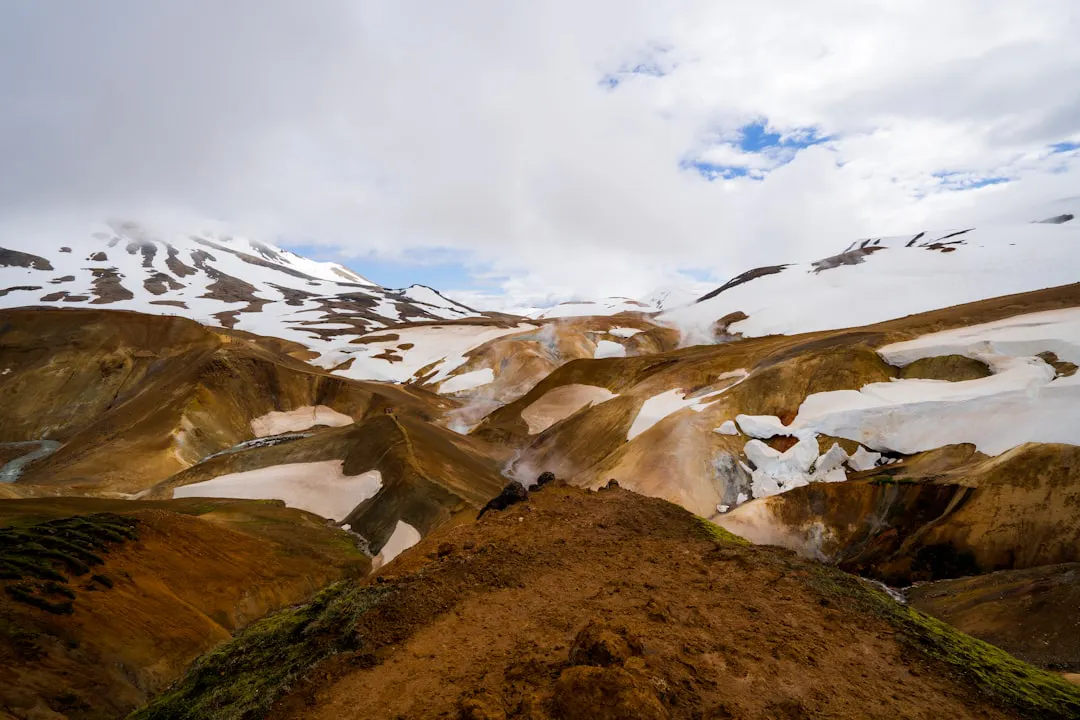
The landscape around Landmannalaugar is unlike anything else in Iceland, and I say that as someone who has spent her whole life on this island. The rhyolite mountains — ryólítt, we say — are streaked in colours that seem too vivid to be geological: pink, yellow, green, burnt orange, deep burgundy. It is caused by the slow cooling of lava combined with hydrothermal activity, and the result is a hillside that looks like someone took a handful of chalk pastels and dragged them across the rock.
The most walked route from the campsite is up to Bláhnúkur — the Blue Peak — which sits directly above the reserve. It is a steep climb that takes roughly two to three hours return, and it rewards you with a view across the lava field of Laugahraun and the painted ridgelines stretching south. In September, the trail can be icy near the top in the mornings. Bring proper footwear. Not trail runners. Not sandals. Boots with ankle support.
Then there is Laugavegurinn — the famous multi-day trail that runs roughly 55 kilometres from Landmannalaugar south to Þórsmörk. Many people use Landmannalaugar as the starting point for the full route, which takes most hikers four days. In September, the huts along the trail operated by Ferðafélag Íslands (the Icelandic Touring Association) are still open, but hut space fills up. Book months in advance, not weeks.
And there is the hot spring itself. The geothermal pool at the campsite is where naturally hot water from underground mixes with cold glacial meltwater to create a temperature you can actually lie in. After a day on the trails, getting into that water while steam rises around you and there is snow on the peaks above — that is a very specific kind of satisfaction. No swimsuit hire on site; bring your own. The facilities at the campsite are basic but functional.
The Closing Window — How to Think About Timing
I want to give you actual, useful advice here rather than vague reassurance.
Early September — roughly the first two weeks — is your safest window. Highland bus services are still running, the F-roads are generally clear, and daytime temperatures are cold but walkable. Expect single-digit Celsius temperatures at altitude, with the possibility of wind that makes it feel colder. Layers, a waterproof outer shell, and a hat are not optional.
Mid to late September becomes genuinely unpredictable. Some years the roads stay open and conditions are fine. Other years, an early autumn storm brings snow to the highlands and the access roads close within days. The Vegagerðin agency monitors and gates the F-roads when conditions become unsafe. You cannot negotiate with a closed gate.
The honest approach: do not build your entire trip around Landmannalaugar in late September without a backup plan. If it is the only thing you are coming for, go in early September. If it is part of a broader trip around the south and east, then a late September attempt is worth considering — but have something else to do if the roads are closed when you arrive.
Pro Tip: Follow the Vegagerðin Facebook page and check road.is the evening before your planned drive. F-road closures are posted promptly. If the F208 or F26 shows as closed, do not attempt it. No photograph is worth getting stranded.
If You Are Camping: Read This Section Twice
The campsite at Landmannalaugar is run by Ferðafélag Íslands and is genuinely well organised by highland standards. There are toilets, a cooking shelter, and a small hut with a warden. In September, it is far less crowded than August, which is one of the genuine pleasures of going late.
However: September nights in the highlands are cold. Below freezing cold, potentially. If you are bringing a tent, it needs to be a three-season tent at minimum, with a sleeping bag rated for temperatures well below zero. Condensation builds up fast in the cold. Your boots will freeze overnight if you leave them outside. These are not dramatic warnings — they are the practical realities of highland camping in autumn.
Also, the campsite fills up on weekends even in September. If you are arriving on a Friday night, do not assume you will find space. The Ferðafélag Íslands website handles bookings; use it.
For those who want the experience without sleeping on frozen ground, the mountain huts along the Laugavegur route are the middle option — basic bunks, shared kitchens, and a roof over your head. As I said: book early. I cannot stress this enough.
Come With a Plan, Leave Room for the Mountain
Landmannalaugar in September is worth the logistical effort. Not because of some abstract idea of the landscape — but because the specific combination of colours, cold air, fewer people, and the awareness that this is the end of the season gives the whole place a particular atmosphere. You feel the year turning.
If you want to make this trip properly, come with confirmed transport, confirmed accommodation or campsite bookings, appropriate gear, and the flexibility to move your plans by 24 hours if the weather asks you to. We can help with the transport side through QR Travel — our guided Landmannalaugar experience runs from Reykjavík and covers the full day, including time at the hot springs and the main hiking routes. If you are planning to walk the full Laugavegur trail, we also offer guided versions of that route with hut bookings included, which takes the logistical pressure off entirely.
The highlands do not wait. The season closes on its own schedule, not yours. Go in September, go prepared, and go while the roads are still open.
If you have questions about planning a late-season visit, drop them in the comments below — I read every one.

