Reynisfjara in Autumn: The Waves Don't Care How Beautiful It Is
Published
Reynisfjara is worth every kilometre of the drive south. But autumn turns the ocean savage. Here's how to visit without becoming a statistic.

The first time I stood at Reynisfjara in late October, I watched a grown man get knocked flat by a wave that came from nowhere. Clear sky, calm-looking water, nobody panicking — and then suddenly he was on his back, soaked, dragging himself up the slope while his partner screamed. He was fine. Embarrassed, freezing, but fine. The couple next to them didn't even flinch. They just kept taking photos.
That is the problem with Reynisfjara. It looks manageable. The basalt columns are right there, the cave is right there, the sand is smooth and dark and flat. Everything about it says: walk closer. And the ocean waits.
I want to be clear before anything else — this beach is worth visiting. Genuinely. I have driven the south coast more times than I can count and I still stop here. But I am going to spend a fair amount of this post talking about the sea, because autumn specifically changes the conditions in ways that are not obvious from the car park, and people have died here. That is not a scare tactic. It is just true.
What Autumn Actually Does to This Beach
Reynisfjara sits on Iceland's south coast, about 180 kilometres from Reykjavík, just west of the village of Vík í Mýrdal. The beach faces directly south into the North Atlantic with no landmass between it and Antarctica. In summer, you get long days, relatively calm swell, and thousands of visitors who mostly stay out of the water because they are sensible or because their tour guide told them to.
Autumn is different. From roughly September through November, Atlantic storm systems start pushing bigger swells north. The waves do not look proportionally bigger — that is the trap. The ocean can appear quiet and then produce a wave that travels 40 or 50 metres up the beach with almost no warning. These are what people call sneaker waves, or rogue waves. They are not technically rare. In autumn at Reynisfjara, they are frequent enough that you should plan your entire visit around them.
The slope of the beach is part of the problem. Reynisfjara drops off steeply into deep water very quickly, which means waves do not slow down gradually the way they do on a gently shelving beach. They arrive with most of their force intact. The wet, black sand is also considerably heavier to move through than it looks. If a wave catches your legs, getting back up the slope is harder than your brain expects it to be.
Pro Tip: The warning signs at Reynisfjara are not decorative. They are updated and monitored, and the red warning flag means exactly what it says. When it is flying, stay well back — the Icelandic Met Office sea-swell data is publicly available and worth checking before you leave Vík if you want to understand what you are dealing with that day.
Related experiences


The Part Where I Tell You What to Actually Look At
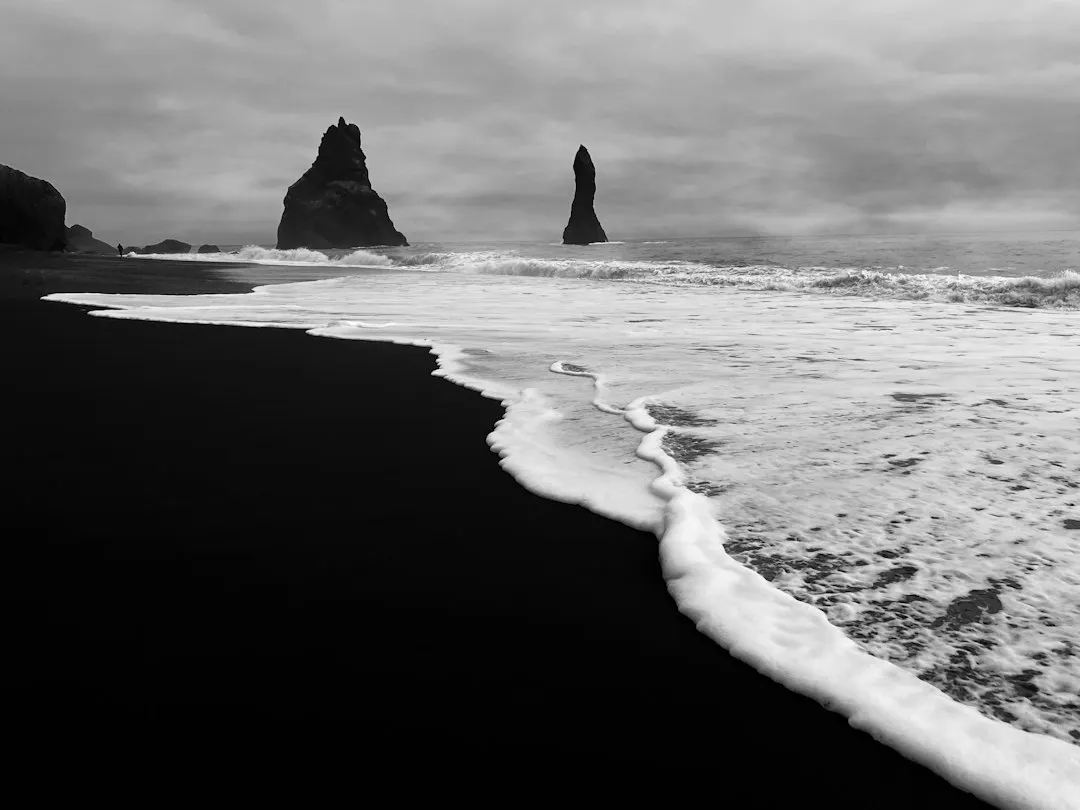
Right. The beach itself. Because it genuinely is worth the drive.
The most photographed feature is Reynisdrangar — the basalt sea stacks rising out of the water offshore. There are a few of them, and folklore has it they are trolls caught by the sunrise while trying to drag a ship to shore. I am not going to argue with that. They do look exactly like something that should not be standing there. The light on them in October, when the sun stays low all day, is something else entirely.
The columnar basalt formations along the cave at the western end of the beach — Hálsanef cave — are the other thing people come for. They form hexagonal columns stacked tight together, which sounds like something you would see in a geology textbook but in person looks almost deliberate, like someone built a wall and then gave up. You can walk to the cave and look up at the columns without getting close to the water. That is the right approach. Go to the cave. Look at the ceiling. Then come back.
Puffins nest in the cliffs above the beach in summer, but by autumn they are long gone. The birds you will see in autumn are fulmars and various gulls, and if you are lucky, a white-tailed eagle passing over. Do not expect the puffin experience in October — that ship has sailed, literally, months earlier.
The black sand itself is worth a moment. It is not soft like tropical sand — it is coarser, volcanic, heavy when wet. It sticks to everything. Wear shoes you do not mind destroying. White trainers are a brave choice.
The Safety Rules, Because I Am Going to Be That Person
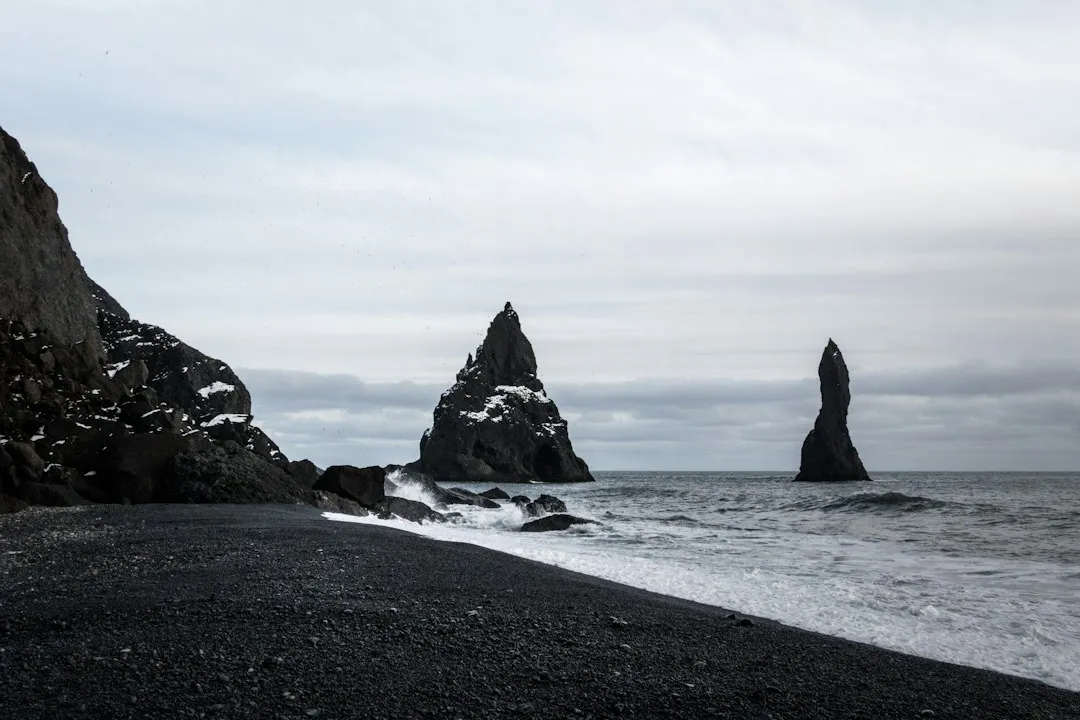
There is a green line painted on the beach. Stay behind it. This is not a suggestion from a nervous tour operator — it reflects where waves have reached, repeatedly, and the line gets moved when necessary. I have seen people step over it for a photo and then sprint back looking shaken when the sea reminds them why the line exists.
Never turn your back on the ocean. I know that sounds like something a nervous parent says. It is also just correct. You cannot read a wave that is already behind you.
If you get knocked down, do not try to stand up immediately. Dig in, get low, let the backwash pass, and then move quickly up the slope. The backwash — the water rushing back down — is often as dangerous as the wave itself because it pulls you toward the water while your legs are unsteady.
Children. Keep them with you and behind the line. The beach looks like a playground. It is not.
Keep at least 30 metres from the water's edge in autumn, more if the sea looks at all active. The wet sand tells you where the last wave reached — if there is wet sand ahead of you, a wave has been there recently.
Pro Tip: The safest time to visit is not when the sea looks calm, but when a lower swell has been consistent for several hours. Check the Icelandic Met Office wave forecast (vedur.is) the morning you plan to go. A swell above two metres warrants serious caution at Reynisfjara.
Getting There and Timing Your Visit
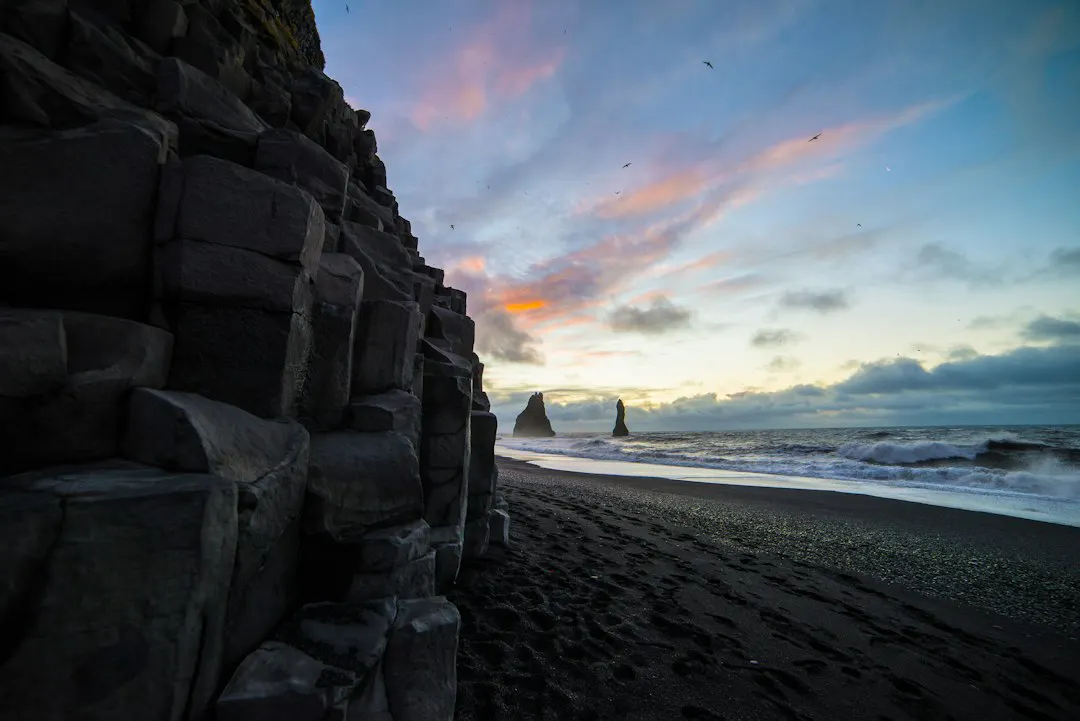
From Reykjavík, you drive the Ring Road south and east. Most people follow Route 1 to Vík and then take the short turn down to the beach — it is well signed. The drive is around two to two and a half hours depending on stops, and there are plenty worth making along the way: Seljalandsfoss, Skógafoss, the plains below Eyjafjallajökull. Do not rush this road.
Autumn daylight is limited. By October you are losing light fast, and by November you might have five or six usable hours. Plan to arrive at Reynisfjara in the middle of the day, not at four in the afternoon. The beach at dusk in autumn is atmospheric in the way that being genuinely cold and barely able to see the waves coming is atmospheric. Which is to say, not ideal for a first visit.
Vík í Mýrdal is close enough that you can base yourself there for a night and visit the beach properly — morning light from the east catches the sea stacks differently, and you will almost certainly have fewer people around you. The village is small but has accommodation and a few places to eat. It also has a petrol station, which matters more than it sounds if you are heading east toward Skaftafell.
If you want to see more of this stretch of coast properly, QR Travel runs a south coast day tour from Reykjavík that includes Reynisfjara with a guide who knows the beach and keeps people back from the water. That is not me being sycophantic about the platform I am writing for — it is genuinely useful to have someone with you who has stood on that beach in all conditions and knows what to watch for.
What Else Is Worth Your Time While You Are Down Here
Do not drive four hours south just for one beach. The south coast in autumn is at its best when you give it time.
Dyrhólaey is the headland just west of Reynisfjara — you can drive up to the lighthouse and look back along the coast, and the view from the top down to the black sand and the sea stacks gives you a sense of scale you cannot get from the beach itself. The road up is steep and can be closed in bad weather, so check before you commit. It is worth it if it is open.
East of Vík, if you have not been to Skaftafell, go. The landscape changes as you drive toward the glacier — the sand plains of Mýrdalssandur and then Skeiðarársandur are vast and flat and strange, and the glacier tongues coming off Vatnajökull are visible from the road. QR Travel runs glacier hikes from Skaftafell that are available into autumn — if you have never walked on ice, that is the place to do it, with guides and the right equipment rather than your own guess about where it is safe to step.
The drive back to Reykjavík at dusk in October, with the light going orange across the lava fields west of Selfoss, is one of those things I have done dozens of times and still do not skip if I can help it. No brochure required.
Before You Go
Reynisfjara will be there. The waves will be there. The basalt columns are not going anywhere, and the sea stacks have been standing through worse autumns than this one.
What I want you to take from this is not anxiety — it is calibration. You are visiting a beach on the open North Atlantic in late season. That requires a different kind of attention than a beach in summer. Read the wave forecast the morning you go. Check the warning flags when you arrive. Stay behind the green line. Watch the water.
And then actually look at the place. The Reynisdrangar in low autumn light, the columns in the cave, the sheer black flatness of the sand against grey water — it earns the drive. Just earn it safely.
If you want to put together a south coast itinerary that makes sense for the season, the QR Travel team can help you with that — route, timing, what to combine and what to skip. Come talk to us. We live here. We know which days to go and which days to stay in Reykjavík and drink coffee instead.

