Driving Iceland in Autumn: September & October Reality
Orri breaks down what actually changes on Icelandic roads in autumn — shorter days, first snow, closing F-roads, and chasing aurora at 2am.

The first time I got caught out by an October sunset in the Eastfjords, I was still an hour from my accommodation and I had maybe twenty minutes of usable light left. Not dangerous, exactly. Just a reminder that the country you drove through in July is not the same country in October.
Autumn here is not a gentle season. It does not ease you in. One week you have fourteen hours of daylight and tourists everywhere, and then suddenly you are peering through a windscreen at 4pm wondering if those lights ahead are a farm or the edge of the road. Both, sometimes.
This is a guide for people who want to drive Iceland in September and October and actually enjoy it — not white-knuckle it. I will tell you what changes, what closes, what gets better, and where you will get yourself into trouble if you are not paying attention.
The light problem is real, and your GPS will not save you
In late June, you can drive at midnight and it feels like overcast afternoon. By the end of October, sunset is around 5pm and getting earlier every day. By mid-October, you are looking at roughly ten hours between sunrise and sunset, and that number is shrinking fast. This matters enormously for self-drive planning.
The issue is not just darkness. It is that Icelandic roads in the dark, particularly outside the capital region and the Ring Road's most-trafficked stretches, are genuinely unlit. Not dimly lit. Unlit. You are driving by your own headlights, sheep crossings included. The sheep do not care about your schedule.
Plan your driving day to finish before 5pm in October. Not because driving after dark is impossible, but because you will miss the landscape you came to see, and any navigational uncertainty becomes a much bigger problem when you cannot see what is around you. I have driven Route 1 at night plenty of times. It is fine, mostly. But the first time you do it, in an unfamiliar rental car, on an unfamiliar road, is not the time to find out how you handle it.
Pro Tip: The website road.is (Vegagerðin, the Icelandic Road and Coastal Administration) updates road conditions in real time. Check it every morning before you drive. In autumn it becomes essential, not optional.
Related experiences


The F-roads: they are closing, and the signs are not always there yet
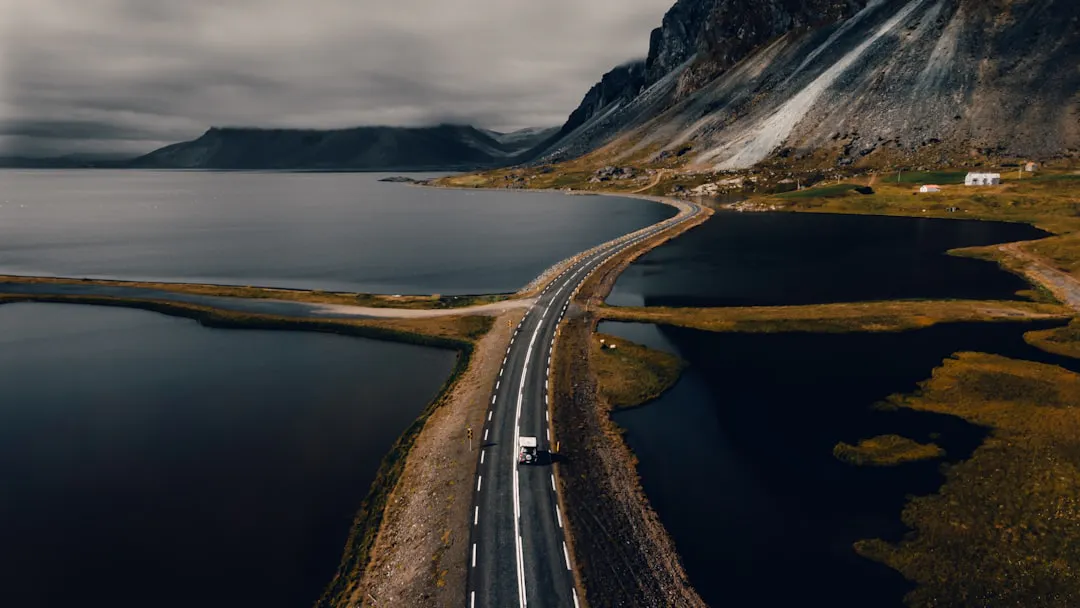
F-roads — the highland interior tracks — are typically closed to all traffic by the end of September, sometimes earlier depending on snowfall. The F is not a grade of difficulty. It is a legal classification. Your rental car insurance almost certainly does not cover F-road driving, and in autumn the surface conditions can change from passable to genuinely dangerous within hours.
Landmannalaugar, Þórsmörk, the Kjölur route — these are the routes people try to squeeze in at the tail end of summer. Some years you can do Kjölur (F35) into early October. Some years it snows in mid-September and that is that. Do not plan your trip around F-road access in October. Plan it as a bonus if conditions allow.
The Highlands themselves are extraordinary in early autumn when the vegetation turns. The moss and low shrubs go amber and rust before the first snow covers everything. If you want that, September is your window, and you still need to check conditions daily.
I run highland tours myself and I have had to turn groups back at the junction because conditions changed overnight. No shame in it. The road will be there next year.
Snow, wind, and the car door situation
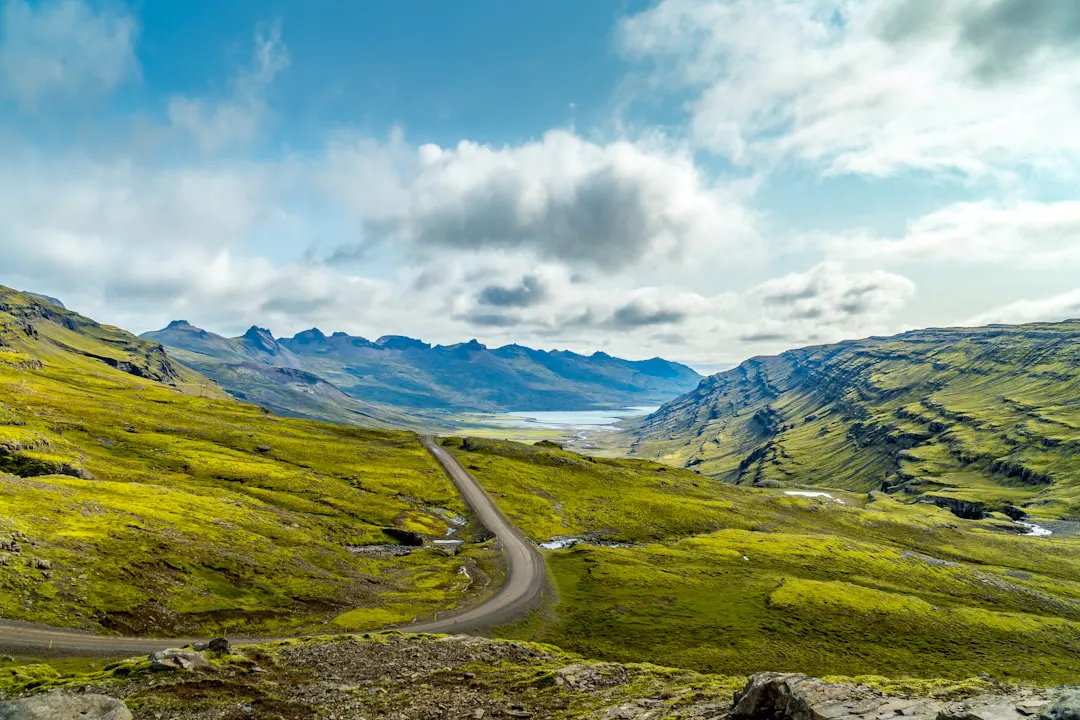
Your rental car is probably a small SUV with all-wheel drive. That is fine. What it is not is a tank, and AWD does not help you stop on ice — it just helps you start moving. Worth remembering.
Snow can appear at any point from September onwards, particularly in the north and at elevation. The first snowfall usually clears quickly at lower elevations, but mountain passes — like the ones on Route 1 through the Eastfjords, or the road up to Þingvellir from the south — can ice over with very little warning. Studded tyres are available on rental cars and are genuinely worth requesting if you are travelling in October.
The wind. People always underestimate the wind. Iceland's autumn winds come off the North Atlantic and they are not polite about it. Opening a car door into a strong gust is how you bend it back against its own hinges. I have seen it happen. The wind will try to rip the car door off your hand. Let it. Then open the door in a controlled gap, get out low, close it properly. It sounds obvious until you are standing on a gravel pull-out in the Westfjords and the car is rocking.
Driving in high winds is also an actual hazard, particularly for camper vans and high-sided vehicles. The Met Office website (en.vedur.is) issues colour-coded wind warnings. Yellow is fine. Orange means you think carefully. Red means you stop driving. This is not dramatic advice — these warnings exist because cars have been blown off roads.
Pro Tip: Rental cars in Iceland come with a gravel protection supplement for a reason. In autumn, roads are less trafficked but the gravel on secondary roads shifts more freely. It is one of the few add-ons that actually makes sense to take.
Where to actually go in autumn (and what to skip)
The south coast is the obvious choice and honestly it holds up. Seljalandsfoss, Skógafoss, Reynisfjara — all still accessible and significantly less crowded than July. The waterfalls are fuller after autumn rainfall. The black sand at Reynisfjara is the same all year, which is to say: do not go near the water. The sneaker waves are not seasonal.
The Snæfellsnes peninsula in September is one of my favourite drives in the country. The light at that time of year, low and angled even at midday, does things to the lava fields that July's high sun does not. It is a long day drive from Reykjavík — roughly three hours each way to the tip of the peninsula — so you need to plan it properly or stay overnight in Stykkishólmur.
The Eastfjords are underrated in autumn. Genuinely. The fjord roads are slow and winding and the villages are quiet, but quiet in a way that feels like the place actually exists rather than being propped up for summer tourism. Seyðisfjörður in particular is worth an overnight. Just check the mountain road into it (Route 93) — it closes in bad weather and can have early snow on the upper section.
What to skip in October: any plan that relies on a specific viewpoint being accessible via a minor road you found on Instagram. Those photos were taken in July. The track might exist. The track might also be under twenty centimetres of snow with no markings. Check before you go, or just let it go.
We run a South Coast day tour from Reykjavík that covers the main highlights without the F-road uncertainty — worth looking at if you want the autumn scenery without the risk of getting your plans wiped out by a road closure. You can find it over on the QR Travel booking page.
Aurora hunting from a moving car: the real version
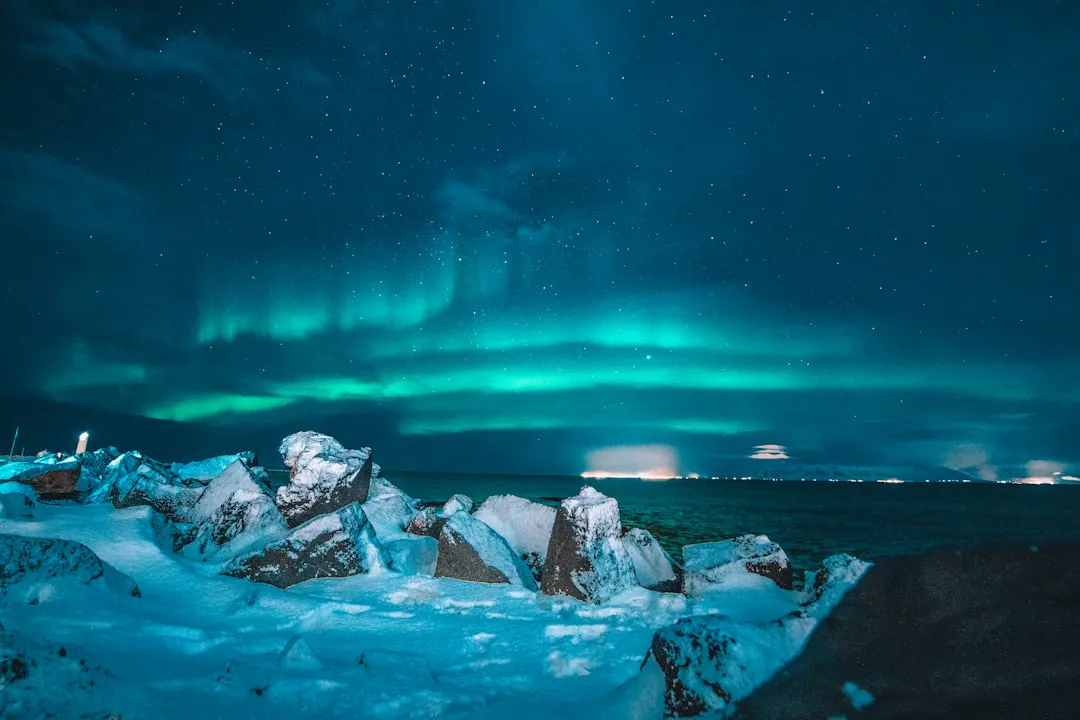
September and October are when the aurora borealis becomes consistently possible. The long summer nights make aurora invisible even when it is active — you need real darkness, and autumn delivers that. This is the genuinely good news about the shorter days.
The forecasting tool at en.vedur.is gives a KP index and a cloud cover map. You want KP 3 or above and clear skies. Cloud cover is the killer. Iceland's weather is patchy, which means driving away from cloud is a real strategy. I have driven an hour east from Reykjavík on a clear night, watched a strong aurora display from a pull-out on Route 1, and been back in bed by 2am. It works.
What does not work: standing in the hotel car park in Reykjavík squinting at the sky. Light pollution from the capital kills weaker displays. You need to be out of town. Twenty minutes can be enough — the road towards Þingvellir, or south towards Selfoss — but further is better.
Dress for standing still in the cold, not for driving. The inside of your rental car is warm. The outside of your rental car at midnight in October is not. Layers, a hat, something waterproof on top. Give your eyes ten minutes to adjust before you decide the show is not happening.
If you would rather have someone else do the driving and the forecasting on a dedicated night out, we offer an aurora hunting tour from Reykjavík that chases conditions across the southwest — the driver does the cloud-dodging so you are not navigating in the dark in an unfamiliar place. Some nights it is spectacular. Some nights we see nothing. That is the aurora. Anyone who guarantees it is selling you something.
Pro Tip: The Aurora Forecast app (from the Icelandic Met Office) is free and reliable. Set an alert for KP 3 and above. Your phone will wake you up. Whether you get out of bed is your problem.
Practical things that actually matter in autumn
Petrol stations thin out as you get further from the Ring Road, and in autumn some of the smaller stations in the interior reduce their hours or close entirely. Fill up when you see a station. Do not wait until you feel like you need to. The general rule I follow: if I am below half a tank and there is a station, I stop.
Accommodation also changes. Many guesthouses and rural hotels close for the winter between late September and early November. Book before you arrive — do not assume you can find somewhere on the night. The places that stay open are often excellent and happy to have guests, but the variety is narrower than summer.
Layers are not optional. Neither is a windproof outer layer. Rain in Iceland in autumn is horizontal, occasionally. A waterproof that works in a light London drizzle will not work on the south coast in an Atlantic low. Get something proper before you go, or accept that you will be cold and wet in a way that stops being interesting quite quickly.
And finally: slow down. Not metaphorically. Actually slow down. Autumn roads have debris, wet leaves on tarmac in the rare wooded areas near Akureyri, and sheep that have not been gathered in yet. The speed limits exist, and on the Ring Road the limit drops to 80km/h on unsealed sections. The speed cameras are real and the fines are real and neither of them cares that you are on holiday.
Come in autumn. Drive carefully. Check the roads every morning. And if the weather closes in for a day and you are stuck inside somewhere reading a book — that is Iceland working as intended. Not every day is a driving day. Some days you sit it out, and that is fine too.
If you want to put together a self-drive itinerary or book any of the tours I have mentioned, the QR Travel site has options across the whole country. Have a look and see what fits what you are actually trying to do — not just what the algorithm thinks you should want.

