Camping in Iceland: Campsites, Rules & Wild Camping (2026)
Published
Orri breaks down Iceland's camping rules, best campsites, and what wild camping actually permits — no fluff, just what you need to know.

The first time I slept in a tent at Landmannalaugar, I woke up at 3am convinced it was noon. Full light, birds going, some German couple already making coffee outside. I lay there for a minute trying to figure out if I'd slept at all, then gave up and made coffee too. That is camping in Iceland in summer. You will either love it immediately or spend three nights staring at the ceiling of your sleeping bag until you buy a proper eye mask.
This guide is for people who actually want to camp here — not just pin a photo of a tent with a volcano in the background. I will tell you where to go, what the rules are, and how to avoid the mistakes that make people swear off camping forever. Some of those mistakes were mine.
What the law actually says about wild camping
Iceland passed stricter camping regulations in 2015 under the Nature Conservation Act, and they have been enforced more seriously since. The short version: you cannot just pitch a tent wherever you want and pretend this is 1987.
Wild camping — meaning outside designated campsites — is technically permitted in most uninhabited areas for a short stay of one or two nights, provided you are not on private land, cultivated land, or within 200 metres of a farmhouse or summer house without the landowner's permission. You must leave no trace. No fire pits, no waste, nothing. The ground here does not recover quickly — moss that takes decades to grow can be destroyed in an afternoon.
In practice, this means the highlands are generally fine for wild camping if you are responsible. The south coast near the Ring Road, the Snæfellsnes peninsula, and areas around popular attractions are a different story. Landowners near Skógafoss, Seljalandsfoss, and Vík have fenced and signed their land specifically because so many people were camping without permission. Do not ignore those signs. People here know each other. It gets back.
National parks — Þingvellir, Vatnajökull, Snæfellsjökull — do not permit wild camping at all. Designated campsites only. This is not a grey area.
Pro Tip: If you are unsure whether an area is private, the Ísland í Korti app (the official Icelandic mapping app) shows land ownership boundaries. It is free and it has saved me several awkward conversations with farmers.
Related experiences


The campsite system, and which ones are actually worth it
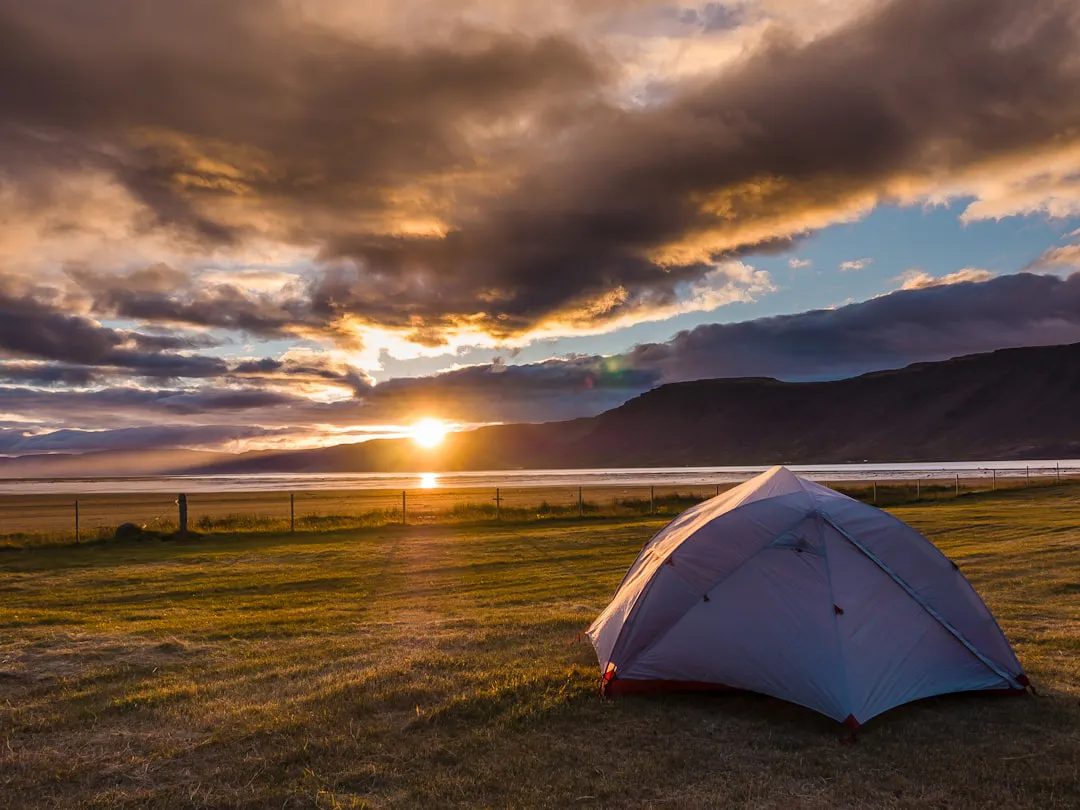
Iceland has a network of registered campsites that ranges from a flat patch of gravel with one toilet to genuinely excellent setups with hot showers, laundry, and kitchens. Most are run by local municipalities or the Ferðafélag Íslands (the Icelandic Touring Association). The quality varies enormously.
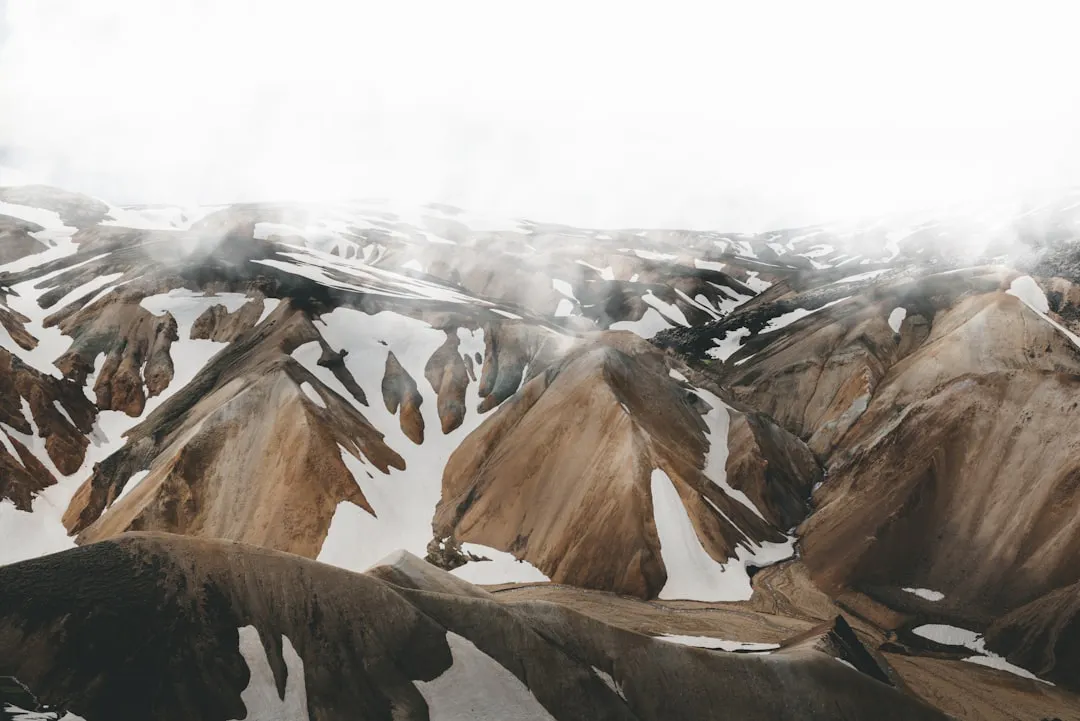
Landmannalaugar is the one everyone talks about, and it earns it — not because it is luxurious, but because it sits inside a landscape that looks like someone spilled a paint set over the hills. Rhyolite mountains in green, yellow, red, and brown, a geothermal river running through camp, and the starting point for the Laugavegur trail. The facilities are basic: toilets, a hut with a small shop, and a natural hot spring that everyone piles into. It gets busy in July. Very busy. Go in late August if you want some space.
Skaftafell, inside Vatnajökull National Park, is my personal favourite for the combination of easy access off the Ring Road and serious hiking options. The campsite there is large and well-maintained, and you are within walking distance of Svartifoss waterfall and several glacier trails. We run a glacier hike from Skaftafell through QR Travel that starts right from the campsite area — if you want to get onto the ice without driving anywhere, that is a good option.
Þórsmörk is harder to reach — you need a 4x4 or a highland bus because of river crossings on the F-roads — but if you make it, the campsite sits in a sheltered valley with mountains on three sides. Wind is less of a problem there than almost anywhere else in Iceland. That alone makes it special.
Reykjavík has a campsite at Laugardalur, about 4km from the city centre. It is fine. It is not a wilderness experience. It is a place to sleep cheaply while you use the city, and it does that job adequately. Showers, kitchen, good bus connections. I would not build your trip around it, but I have used it plenty of times.
Pro Tip: The Camping Card (Tjaldferðakort) covers two adults at over 40 campsites for a flat fee per season. If you are spending more than a week camping and sticking to registered sites, the maths usually works out in your favour. Check the current season's price and participating sites before you buy — not every campsite is included.
F-roads, highland campsites, and when you can actually get there
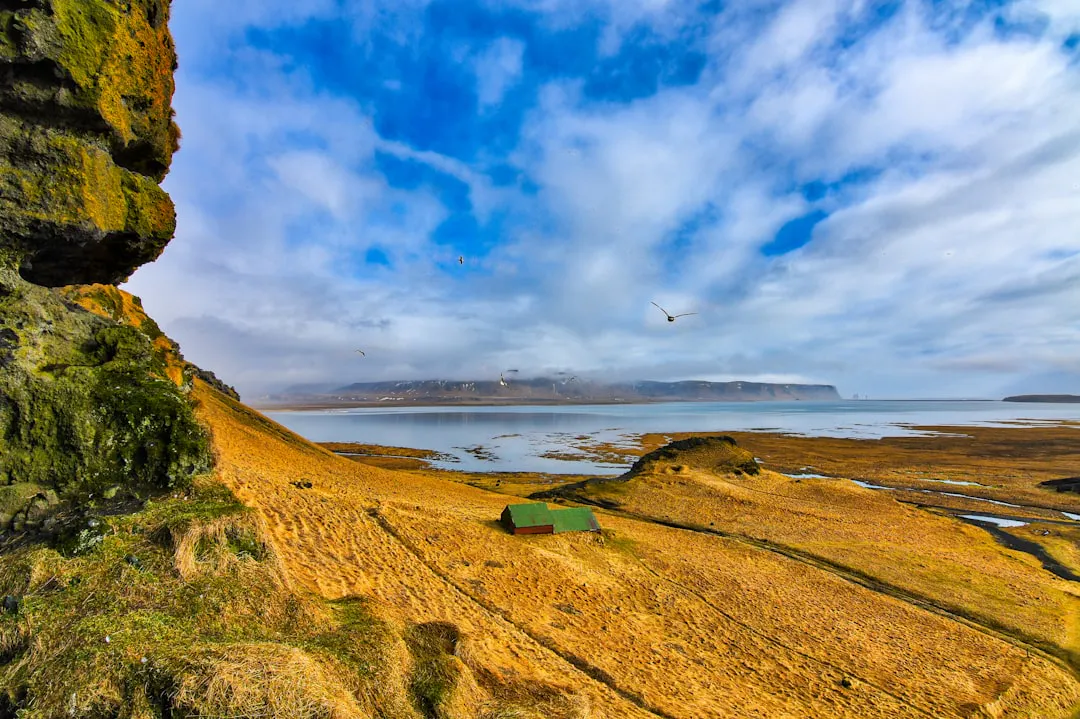
The highland campsites — Landmannalaugar, Þórsmörk, Hveravellir, Kerlingarfjöll — are only accessible when the F-roads are open. That is typically late June to early September, sometimes shorter depending on the winter snowpack. In 2025, some F-roads in the interior did not open until early July. Do not plan to drive an F-road in May and assume it will be fine.
F-roads require a 4x4. Not an all-wheel-drive crossover. A proper high-clearance 4x4. Some of them involve river crossings where you need to read the water before you drive through it. If you have not done this before, go slowly, check depth on foot if it looks deep, and watch what other drivers do. Do not follow a large jeep through a crossing and assume your small rental can do the same. It cannot.
Hveravellir is a campsite I think is underused. It sits roughly in the middle of the Kjölur route (F35) between Gullfoss and Akureyri, has a geothermal pool, and is genuinely quiet compared to the southern highland sites. It is a long drive to get there but it feels like the middle of nowhere in a way that Landmannalaugar, which gets bus tours now, no longer quite does.
QR Travel runs highland day trips and multi-day tours into some of these areas if you do not want to deal with the driving yourself. Worth considering if this is your first time on F-roads.
Surviving the midnight sun with your sleep intact
It does not get dark in Iceland in June and July. At the summer solstice in Reykjavík the sun dips just below the horizon for a couple of hours but the sky stays bright the whole time. Further north, around Akureyri, it does not set at all for a period around midsummer.
Your body will not care about any of this. It will still try to go to sleep at the usual time and get confused. Some people adapt fast. Others spend two weeks running on four hours a night and wondering why they feel strange.
A good sleep mask is not optional. Get one that actually blocks light — the cheap airline ones are useless here. A blackout inner for your tent is better if your tent has one. Earplugs help too, because it turns out birds also do not care what time it is.
Beyond the sleep issue, the midnight sun is genuinely useful for camping. You can hike at 10pm in full light. You can set up camp late without a headtorch. If you want to photograph Landmannalaugar in low, warm side-light, you do it at midnight in June, not at midday. The light at 11pm in the highlands in July is unlike anything you will get at normal hours.
What to pack that the internet usually forgets to mention
Wind. Every packing list tells you to bring layers and waterproofs, which is correct, but they underestimate the wind. A tent that is fine in normal conditions will have a terrible time in Iceland. Check your tent's wind rating seriously. Freestanding dome tents handle gusts better than tunnel tents that rely on tension in one direction. And always, always peg out every single guy line, even if it looks calm. It will not stay calm.
The wind will try to rip the car door off your hand. Let it. Then close it properly.
Cooking gear matters more here than in most places because a lot of highland campsites have no cooking facilities, and buying hot food every day gets expensive fast. A gas stove and a good pot go a long way. Skyr from any N1 petrol station is the best camping breakfast I know — high protein, no cooking, keeps well in a cool bag.
A good sleeping bag rated to at least -5°C even in summer. Highland nights can drop to low single figures in June. People arrive with three-season bags rated to +5°C and then lie there shivering at Landmannalaugar wondering what happened. The weather here in summer is not warm. It is light, which is different.
Bring cash or make sure your card works offline. Some highland huts and smaller campsites take card payment but the connection is unreliable. A few still prefer cash for the camping fee.
Pro Tip: The N1 petrol station chain has locations across Iceland including some surprisingly remote ones. They are the most reliable place to refuel, use a toilet, buy food, and get a hot dog (the Icelandic pylsur — a lamb and pork sausage with crispy onions — is genuinely good and costs almost nothing compared to restaurant prices).
Come out to Þórsmörk and see for yourself
I have been camping in Iceland for most of my life and I still find new things to like about it every summer. A campsite in the highlands at 11pm with the light going sideways across the hills and the wind dropped for once — that is a good evening. Not every evening is like that. Some of them involve horizontal rain and a tent pole that snaps and noodles cooked on a stove you are shielding with your body. That is also part of it.
If you want to do this properly on your first visit, I would suggest pairing a few nights at a southern campsite like Skaftafell with a highland night or two at Landmannalaugar or Þórsmörk. You get the contrast, you get the ice and the geothermal in the same trip, and you are not committing to a full week in the interior if the weather turns. QR Travel can help put that kind of itinerary together — the team knows these routes well and can point you at tours that complement a camping trip rather than replacing it.
Come prepared, follow the rules, and do not leave anything behind. The land here is not as tough as it looks.

