Vestmannaeyjar: Iceland's Best Island Escape Most Tourists Skip
Published
Puffins, a volcano you can walk up, and a harbour that survived an eruption. Here's how to actually get to Vestmannaeyjar and why you should.

Most people drive past the Vestmannaeyjar ferry terminal on the Ring Road, glance at the sign, and keep going. I've watched it happen. They're heading to Vík, or Skaftafell, or wherever the itinerary says to go next. And I understand — you have limited days, a rental car you're slightly afraid of, and a list of places you've seen on Instagram. But I'll tell you what I tell anyone who asks me where I'd go if I only had one day to spare: take the ferry.
Vestmannaeyjar is a small archipelago sitting about ten kilometres off Iceland's south coast. Heimaey is the only inhabited island, and it's the one you're going to. About four thousand people live there. The island is compact, the harbour is dramatic in a way that photographs don't quite capture, and there are more puffins than you will know what to do with. It is also the site of one of the most significant volcanic eruptions in modern Icelandic history, and you can walk up the volcano that nearly ended the town.
This is not a hard trip. It is not expensive. It does not require special equipment or a guided tour. What it requires is that you actually leave the main road and get on a boat.
Getting There Without Losing Your Mind
The ferry is operated by Herjólfur, and it runs from Landeyjahöfn, which is just off Route 1 near Þórsmörk junction — roughly two hours from Reykjavík. The crossing takes about thirty-five minutes. In summer, there are multiple sailings each day in both directions, which means you can do this as a day trip if you want, or stay overnight and do it properly. I would stay overnight.
The other option is to fly from Reykjavík domestic airport. Eagle Air operates that route. It's faster, obviously, but you miss the approach by sea, which is genuinely worth something — watching Heimaey grow out of the water with the cliffs rising either side of the harbour entrance is not something you get at 30,000 feet.
Pro Tip: Check the ferry schedule on the Herjólfur website before you go, not a third-party aggregator. Sailings can be adjusted seasonally and occasionally cancelled in rough weather. Book in advance in July and August — locals use this ferry too, and it fills up.
One thing nobody tells you: Landeyjahöfn can be affected by swell even on days that look calm. If the ferry is cancelled, there's a backup sailing from Þorlákshöfn, which is further west and takes about two and a half hours. It's a longer crossing and it's rougher. Take seasickness tablets regardless. I grew up near the ocean and I still take them on the long crossing.
Related experiences


The Volcano That Almost Ended the Town
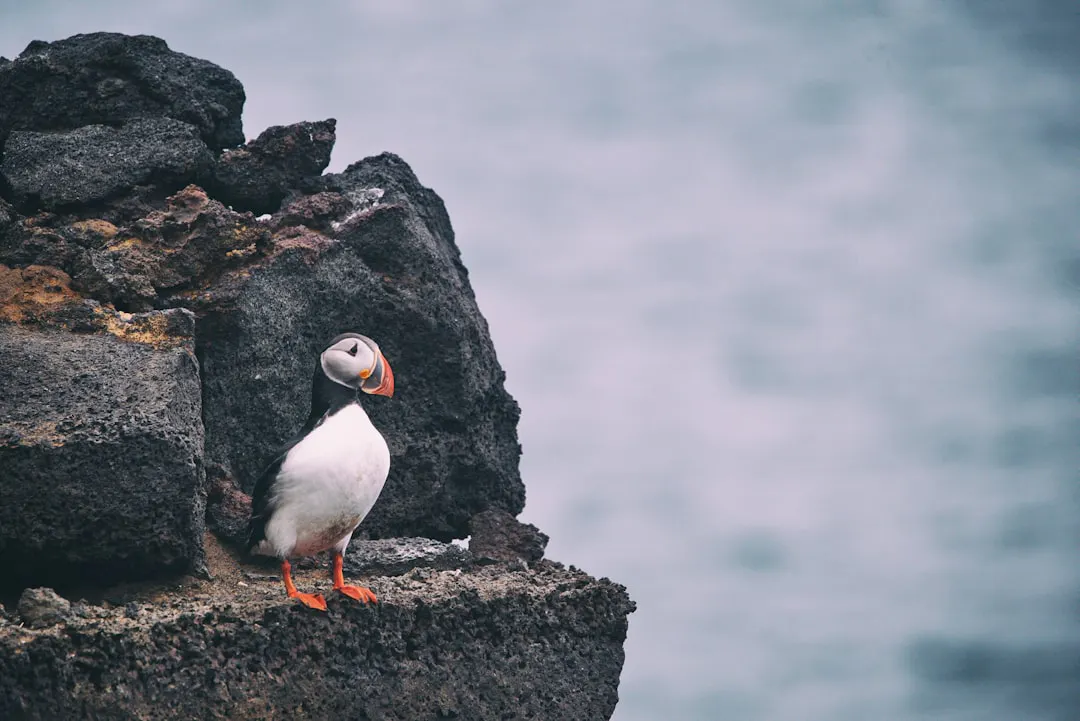
In January 1973, a fissure opened on the eastern side of Heimaey and started producing lava. This was not in the middle of nowhere — it was on the edge of the town. About five thousand residents were evacuated overnight, mostly by fishing boat. The eruption lasted five months. Lava buried a significant part of Heimaey, including hundreds of houses, and it was advancing towards the harbour — which would have meant the end of the island's fishing industry and, realistically, the end of the town.
What happened next is the part Icelanders are still proud of. Workers pumped seawater onto the lava front to slow and eventually stop its advance. It worked. The harbour was saved. The town was rebuilt. People moved back.
The volcano is called Eldfell, and you can walk to the top of it. The trail starts from the edge of town and takes maybe forty-five minutes to an hour at a comfortable pace. The ground near the summit is still warm — you can feel it through your boots if you stand still. The views from up there are the best on the island: you can see the whole of Heimaey, the older volcanic peak Helgafell next to it, the south coast of Iceland across the water, and on a clear day the Eyjafjallajökull ice cap.
Part of the 1973 lava field is now a neighbourhood called Þakgil — no, wait, that's somewhere else. The lava that buried the eastern part of town is still there, and the Eldheimar museum is built into it. The museum opened in 2014 and it's genuinely good. They excavated a house from the lava and built the museum around it. You can see the house exactly as the lava left it. It's not theatrical or overdramatic — it's just the house, half-buried, with the family's belongings still inside. That's enough.
Pro Tip: The Eldheimar museum is small and it gets busy in the afternoon when day-trippers arrive. Go in the morning, before the ferry crowds come through.
Puffins: The Honest Version
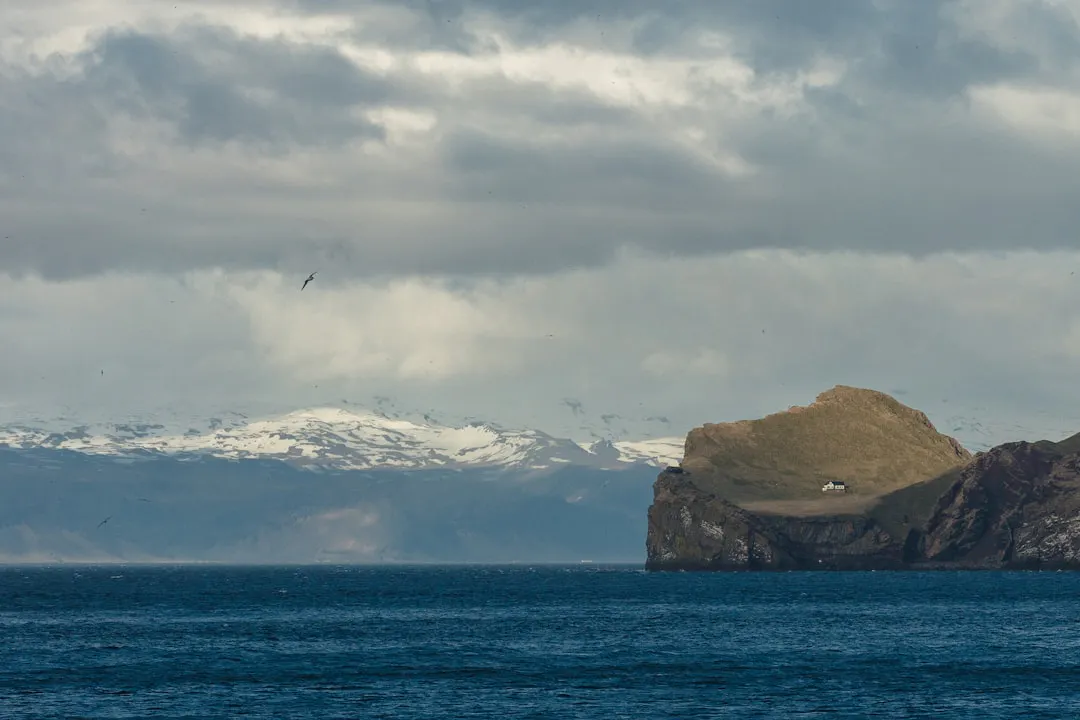
Yes, there are puffins. A lot of them. Vestmannaeyjar has one of the largest Atlantic puffin colonies in the world — the birds nest in burrows in the cliffs around the island between roughly May and August. If you're visiting in that window, you will see puffins. This is not a matter of luck or getting up at dawn or any of the nonsense that comes with wildlife watching elsewhere.
The cliffs on the west and south sides of the island are where most of the colony is. You can walk out to Stórhöfði, the southernmost point, and watch them from the clifftops. They're small and they fly in this slightly chaotic way — quick wingbeats, not graceful — and they land in their burrows like they're still figuring out how landing works. It doesn't get old.
What I won't do is dress this up. Puffins are not majestic. They're funny-looking birds that smell like fish. But there are an enormous number of them, and watching them come and go from the cliffs with the Atlantic below is one of those things that just sits with you afterwards. I don't know how else to explain it.
Every August, local children participate in puffling rescue — young puffins that have fledged and gotten confused by town lights are collected and released at sea. If you're there at the right time and the locals are out doing it, that's something to see. But it's not organised for tourists, it's just something that happens.
If you'd rather see the puffins from the water, QR Travel runs a boat tour around the island that gets you close to the cliffs and the sea caves. It's the better view for the birds, and you get to see the harbour entrance from the outside, which is impressive in a completely different way to standing in it.
The Harbour and the Town
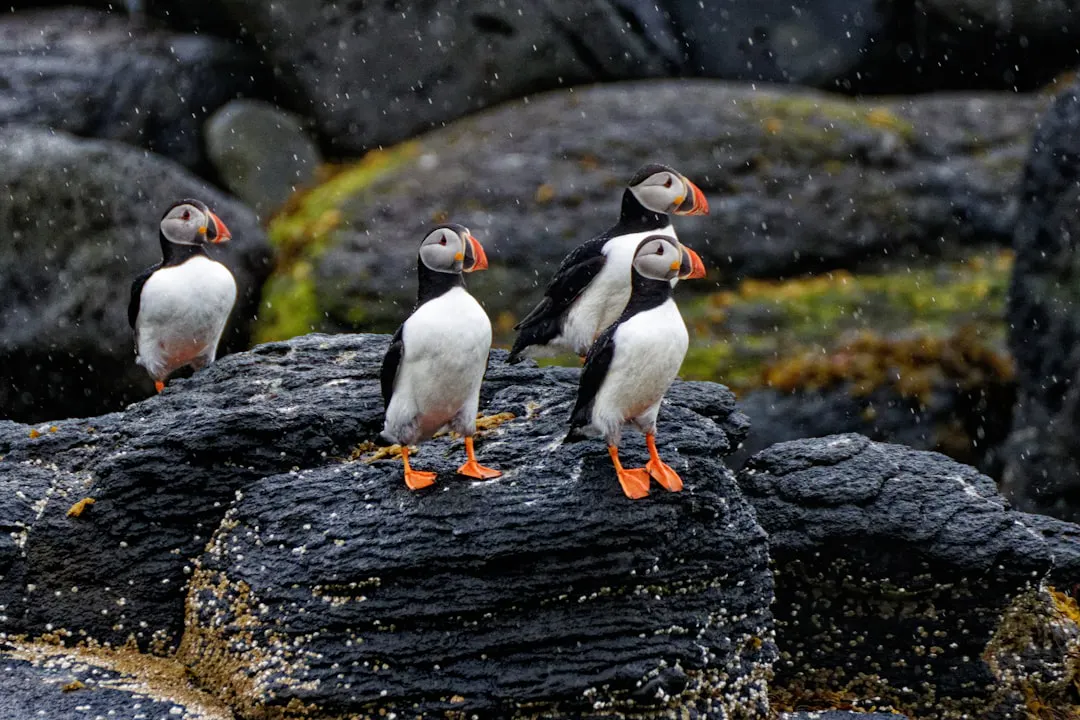
Heimaey's harbour is functional first. It's a working fishing port — Iceland's most important, actually, by volume. There are trawlers and smaller boats, fish processing, the smell of the sea and work. The harbour walls are high because they had to build them high after the 1973 eruption added land to the island and reshaped the whole coastline. That's not a tourist feature, that's just geology being inconvenient.
The town is small enough to walk in an afternoon. There are a few decent restaurants — Slippurinn is the one people talk about, and they're right to, though book ahead in summer because it fills up fast. It's in an old machine workshop by the harbour. The food is good and the prices are what you'd expect for Iceland, which is to say, not cheap, but not embarrassing either.
There's a swimming pool, as there is in every Icelandic town, because that's just how we do things. It's on Austurvegur. Go in the evening when the day-trippers have left and it's mostly locals. That's when you get a sense of what the place actually is, rather than what it looks like during tourist season.
The aquarium is small and worth twenty minutes if you have children with you. The golf course is next to the lava field from 1973, which is a very Icelandic design choice — just put the fairway next to the disaster, why not.
Staying Overnight: Why You Should
Day-trippers arrive around midday on the first ferry and leave on the last one. Which means if you stay the night, you get the island in the morning and the evening, which is when it's actually itself. The puffins are more active at dusk. The harbour is quiet. The light in summer lasts absurdly long, and you can walk the Eldfell trail at ten in the evening in full daylight.
There are guesthouses and small hotels in town. Nothing luxurious — this is not that kind of place — but perfectly fine. Book early for July and August. The island is popular with Icelanders on summer holidays, which should tell you something.
If you're organising the whole south coast loop — which I'd recommend over doing just Reykjavík and the Golden Circle — QR Travel has itineraries that build Vestmannaeyjar in properly, including the ferry timing, accommodation, and pairing it with Þórsmörk or Skaftafell on the way back east. It makes more sense than bolting it on at the last minute and hoping the ferry times work out.
Pro Tip: If you're driving a rental car onto the ferry, check your rental agreement. Some agreements have restrictions on ferry crossings or islands. It's rarely a problem, but find out before you're at the terminal.
Before You Go
Summer on Heimaey means real summer — warmer than the highlands, protected from the worst of the north wind. But it's still the North Atlantic. Bring a windproof layer. The cliffs at Stórhöfði are exposed and the wind there is not interested in your plans.
The island is small enough that you don't need a car once you're there — you can walk almost everywhere that matters, or hire a bicycle. Bring cash for smaller places, though most accept cards. There's a small supermarket in town for supplies.
Go in June, July, or early August for puffins. The ferry runs year-round, and the island is interesting in winter too — Eldfell is still warm, the harbour is still working, the museum is still open — but the wildlife and the long daylight hours are a summer thing.
If you've been planning an Iceland trip and Vestmannaeyjar isn't on your list, I'd look at that list again. It takes half a day to get there and back. It shows you something about Iceland that the Ring Road doesn't — how people live with the geology, how they rebuilt after the volcano, how a working fishing community sits next to one of the world's great puffin colonies and just gets on with it. That's the island. Come see it yourself.

