Þórsmörk: How to Reach Iceland's Best Summer Valley
No 4x4? No problem. Orri breaks down how to reach Þórsmörk by bus, which hikes are worth it, and what the brochures leave out.

The first time I brought a friend to Þórsmörk, she stepped off the bus, looked at the birch trees, the ridgelines, the glaciers sitting there on three sides, and said nothing for a full minute. That is unusual for her. I have been going there since I was a teenager and I still get that same quiet when I arrive. It is not something I can explain to you — you just have to go.
But before the quiet, there is the bus. And the river. And the part where the bus drives directly into a glacial river and you sit there watching water press against the window and you wonder, briefly, if you have made a terrible mistake. You have not. This is entirely normal. Welcome to the South Iceland highlands.
Getting There Without a 4x4 (Yes, It Is Possible)
Þórsmörk sits at the end of road F249, and the F designation tells you everything — this is a highland road, river crossings included, and a standard rental car will not make it. The rental agreement will tell you the same thing, and unlike some of the rules in those agreements, this one is worth reading. I have seen enough stranded vehicles on the banks of Krossá river to know that people ignore it anyway. Do not be one of those people.
The good news is that Strætó and Reykjavik Excursions both run scheduled bus services to Þórsmörk in summer, typically from around mid-June through early September depending on conditions. The buses they use — the high-clearance, purpose-built ones — ford the rivers without any drama at all. You sit in a warm seat, cross a glacial river, and arrive in the valley without having destroyed your deposit. It is a genuinely good system.
The buses usually depart from BSÍ bus terminal in Reykjavík and the journey takes roughly three to four hours, depending on stops. Book in advance if you are going in July or August. The buses fill up and there is no second one waiting around the corner.
Pro Tip: If you want more flexibility once you are in the valley — walking between the huts, doing longer routes — look at the Strætó or Reykjavik Excursions timetables before you go and plan around them. The last bus back does not wait, and there is no mobile signal to call for help.
Related experiences


The Huts, the Camping, and Where to Sleep
There are three main hut areas in Þórsmörk: Básar, Húsadalur, and Langidalur. Ferðafélag Íslands (the Iceland Touring Association) runs Landmannalaugar and Þórsmörk huts, while Útivist runs Húsadalur. They are separate organisations with separate booking systems, and mixing them up will leave you sleeping on a bench. Book early. Hut spaces go fast, especially the weeks around mid-July.
Camping is available at all three areas. It is cold at night even in summer — Þórsmörk sits at around 200 metres elevation, surrounded by glaciers, and the temperature drops quickly after sunset. A sleeping bag rated for actual cold, not the optimistic summer version, is not optional. I say this as someone who once thought a thin liner would be fine. It was not fine.
Valahnúkur: The Short Hike That Earns Its Views
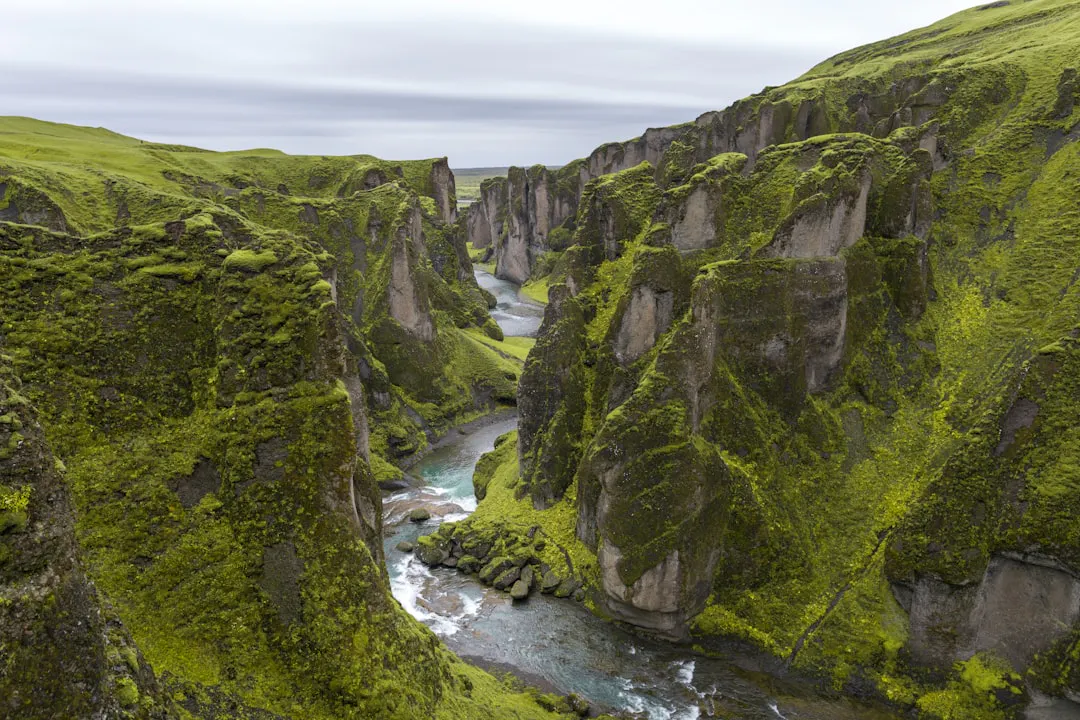
If you only have one day in Þórsmörk and you want to understand why people come here, walk up Valahnúkur. It starts from Húsadalur and it is not a long hike — maybe two to three kilometres round trip — but the ridge gives you a 360-degree look at the entire valley. You can see Eyjafjallajökull to the west, Mýrdalsjökull to the east, and the Krossá river braiding through the valley floor below you. The trail is marked and the elevation gain is manageable. It is steep in places but not technical.
I have done it in fog, which is a completely different experience — you just walk up into nothing and hope it clears. Sometimes it does. Sometimes you stand on a ridge in a white-out and call it character building. Either way, the walk itself is good.
There are other short trails around Húsadalur and Langidalur that take you along the valley floor, through the birch woodland and up to viewpoints along the lateral ridges. The birch trees here are a big part of what makes Þórsmörk feel different from everywhere else in the Icelandic highlands. Most of the highlands are open tundra, wind-scoured and treeless. Þórsmörk is sheltered enough that trees actually grow. It is genuinely unusual by Icelandic standards.
Pro Tip: Valahnúkur is at its best in the late afternoon when the light hits the glaciers from the west. If your bus gets in midday, you have time to eat something, drop your bag, and be up on the ridge for the right light. The hike takes about an hour at a steady pace.
Þórsmörk vs. the Laugavegur — They Are Not the Same Thing
A lot of people arrive in Þórsmörk at the end of the Laugavegur trail, after four days of hiking from Landmannalaugar through Hrafntinnusker, Álftavatn, and Emstrur. If you have done that walk, Þórsmörk is where you collapse into the hut, take off your boots, and stare at the ceiling. I have done the Laugavegur twice and both times I arrived in Þórsmörk feeling like the valley had been put there specifically for people who needed to stop walking.
But coming to Þórsmörk as a day-hiking destination — by bus, without the four-day approach — is a completely different experience, and it is worth doing in its own right. You do not need to earn it with the thru-hike. The valley is not a consolation prize or a finish line. It stands on its own.
The Laugavegur is 55 kilometres of exposed highland terrain, river crossings, and variable weather that changes faster than you can react to it. It requires proper gear, experience with navigation, and genuine respect for the conditions. Þórsmörk as a day destination is none of those things — you get off a bus, walk marked trails, and the terrain is relatively forgiving. Different type of trip. Both worth doing.
If you are thinking about the Laugavegur and want to do it properly, we offer a guided version through QR Travel that covers the full route with experienced guides — people who know what Emstrur looks like in a whiteout and what to do about it. It is worth considering if this is your first time on Icelandic highland terrain.
What the Valley Is Actually Like in Summer
June is my favourite month in Þórsmörk. The snow is still sitting on the upper ridges, the birch trees have just come into leaf, and there are fewer people than in July. The light lasts until midnight and the whole valley has this specific quality of stillness that I associate with early summer in Iceland — everything still waking up.
July is busier. Not unbearable, but you will share the trails. The weather is more reliable, the rivers are lower after the early melt, and the hut wardens are in good humour because it is the height of the season. August starts to feel like summer is on notice. The light changes, the evenings get darker, and there is something in the air that reminds you this is a seasonal place.
The valley is not open in winter. The roads are closed, the rivers are dangerous, the huts are shut. This is a place that exists, for visitors, only in a narrow window. That is part of what makes it feel like what it is — something you have to choose to go and find, in the right season, when the conditions allow it. Iceland does not make everything easy, and Þórsmörk does not pretend otherwise.
Pro Tip: Pack for rain even in July. Þórsmörk is sheltered from wind compared to the open highlands, but rain comes in fast from the south and the valley collects it. A proper waterproof jacket, not a packable cagoule, is worth the space in your bag.
The Crossing, the Quiet, and How to Book It
I want to go back to that bus crossing for a moment, because it is one of the specific things about Þórsmörk that I think people underestimate. When you drive to most places in Iceland, you arrive. You pull into a car park, you get out, you are there. Getting to Þórsmörk by the scheduled highland bus involves crossing rivers that you can see moving fast and grey outside your window. It is a physical transition. The valley is on the other side of something real, and you feel it.
That feeling is part of the experience. The separation is not just geographical — it is the reason Þórsmörk retains a quality that more accessible places in Iceland have largely lost. You have to mean it to get there.
If you want a structured day out that handles the logistics — the bus, the guiding, the route planning — QR Travel runs a day tour to Þórsmörk that takes care of all of that. The Valahnúkur hike is part of the route and the guide knows the valley well. For people who have not navigated Icelandic highland terrain before, it is a reasonable way to do the first visit. You can always come back on your own terms once you know the place.
Book the huts early. Book the bus early. Bring warm layers you are not embarrassed to actually wear. And when you step off that bus and the valley opens up around you, do what my friend did: say nothing for a minute. It deserves at least that.

