Aurora Season Is Back: Catching Iceland's First Northern Lights
Published
Darkness is returning to Iceland and the aurora is already firing. Here's how to catch the first lights of the season during solar maximum.

Last August I was standing on the shore at Kleifarvatn around half past eleven at night, staring at what I was pretty sure was just a weird green cloud. Then it moved. Then it started doing that thing where it folds back on itself and you forget what you were saying mid-sentence. That was the first aurora I caught that season, and I nearly missed it because I assumed it was too early.
Here is the thing about late August in Iceland that nobody tells you in any brochure, tour description, or Reykjavík coffee shop conversation: the darkness comes back fast. One week you are eating dinner outside at ten pm in full daylight, and two weeks later there is an actual night sky. Not twilight. Night. And in 2026, with solar activity sitting at or near the peak of Solar Cycle 25, that returning darkness is colliding with some of the strongest geomagnetic conditions in roughly a decade. The timing is, frankly, absurd. In a good way.
I want to be straight with you before we go further. Aurora chasing is not a guarantee. Not ever. Not even now. Cloud cover, which Iceland produces with alarming enthusiasm, can wipe out a KP-8 display without any warning. What I can tell you is what actually improves your odds, where to go, and what to do when the forecast looks promising at eleven pm and you are already in your pyjamas.
Why 2026 Is Different — And What Solar Maximum Actually Means
Solar maximum refers to the period in the sun's roughly eleven-year cycle when magnetic activity peaks, producing more frequent and more intense solar flares and coronal mass ejections. Those CMEs are what drive strong geomagnetic storms here on Earth. Solar Cycle 25 has been more active than scientists initially predicted, and 2025 and 2026 have already delivered multiple KP-7 and KP-8 events globally. At those levels, the aurora oval expands southward and the displays tend to be brighter, faster-moving, and more colourful than the faint green smear you might have seen on someone else's Instagram in a quieter year.
KP index, if you have not come across it, is the scale used to measure geomagnetic storm intensity. It runs from 0 to 9. In Iceland, on a dark clear night, you can often see aurora at KP-2 or KP-3. At KP-5 and above it is visible across most of the country. At KP-7 or higher, people in Scotland and northern England see it. Here in Iceland at those levels, the sky genuinely goes a bit mad.
The Veðurstofa Íslands — the Icelandic Met Office — runs a free aurora forecast at vedur.is that updates regularly and shows both cloud cover and aurora activity predictions together. I have it open on my phone from late August through April. It is the only forecast I actually trust because it is built specifically for Icelandic conditions. Download it before you arrive.
Pro Tip: The aurora forecast on vedur.is uses a 0-9 cloud cover scale alongside the aurora activity prediction. You want cloud cover at 0-2 and aurora activity at 3 or above. Both numbers matter equally — a KP-7 night under full cloud is just a dark, disappointing evening.
Related experiences


When Does Darkness Actually Return? The Late August Window
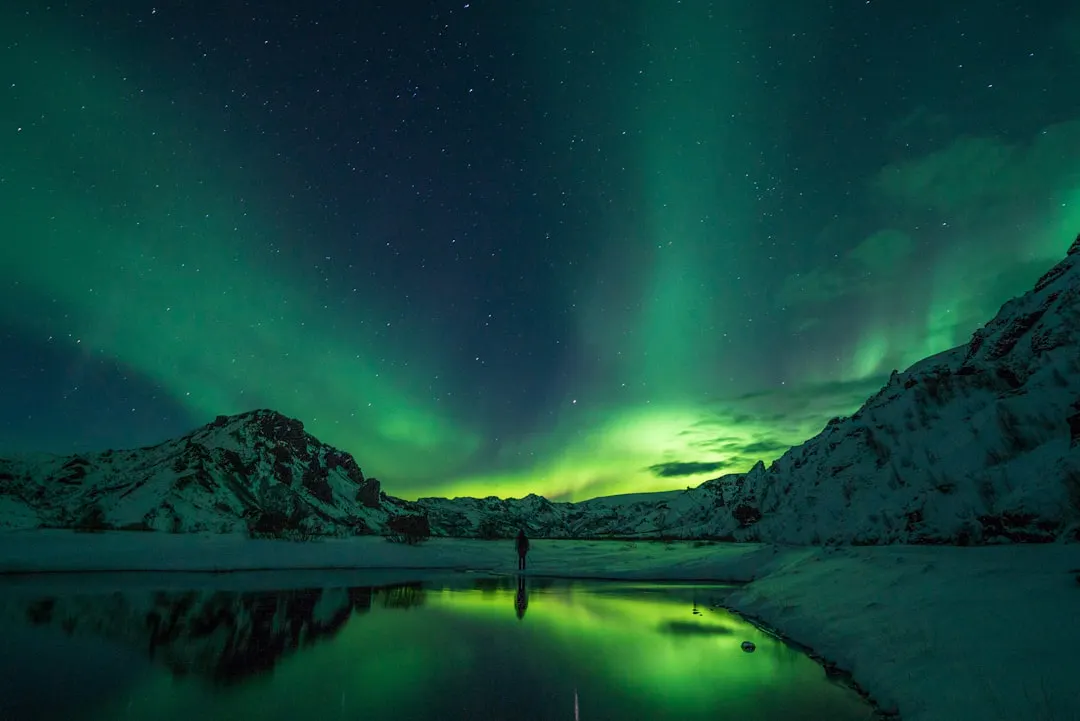
People are always surprised by this. In Reykjavík, true astronomical darkness — where the sun is far enough below the horizon for the sky to actually go dark — does not return until around mid-August or so, and it builds from there. By late August you are getting genuine dark skies for several hours around midnight. It is not the full long nights of October or January, but it is enough. An aurora display that peaks at midnight has a real sky to perform against.
The key window in late August is roughly midnight to two or three in the morning. Set an alarm. I know that sounds obvious but the number of people who check the forecast at nine pm, see a promising activity level, then fall asleep by half ten and miss the whole thing is genuinely staggering. The aurora does not work on tourist schedules.
Temperature at night in late August is typically somewhere between four and ten degrees Celsius depending on where you are in the country. It feels colder than that when you are standing still in a field for an hour. Dress for October. Bring more layers than you think you need. I say this every season and every season someone shows up in a light jacket.
Where to Actually Go — The Spots That Work
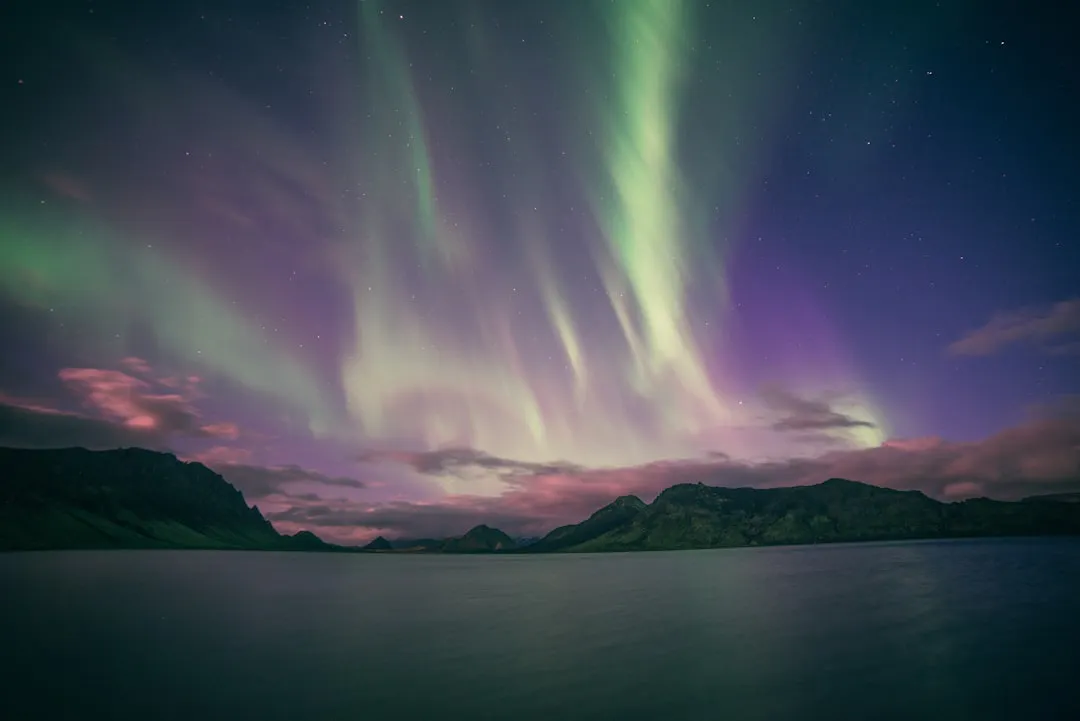
Reykjavík is not your friend here. The light pollution from the capital is genuinely problematic. You do not need to drive for hours, but you do need to get out. The road to Reykjanes, heading south-west on Reykjanesbraut, gets you away from the worst of the city glow fairly quickly. Grindavík area, the lava fields around Krýsuvík, and the shore at Kleifarvatn are all reasonable targets if you have a car and want to stay close.
If you are willing to drive an hour, the Þingvellir area is excellent. The rift valley itself has almost no artificial light, and on a clear night with strong aurora activity the reflection in Þingvallavatn — the lake — is something worth standing in the cold for. Take Route 36 out of Reykjavík. Park at one of the official car parks near the visitor centre and walk down toward the water.
For serious aurora hunting further afield, the south coast around Vík and the glacier lagoons is genuinely exceptional. The combination of the dark coastline, the white glacial ice at Jökulsárlón, and a strong aurora overhead is the kind of thing that makes people quiet in a way that a lot of Iceland's daytime sights do not. The drive from Reykjavík is roughly 375 kilometres along the Ring Road — plan it as an overnight stay, not a day trip.
Pro Tip: At Jökulsárlón, walk through to Fjallsárlón rather than staying in the main car park area. Fewer people, same ice, same sky. Twenty minutes further along the road.
Chasing the Aurora Without a Car — What Your Actual Options Are
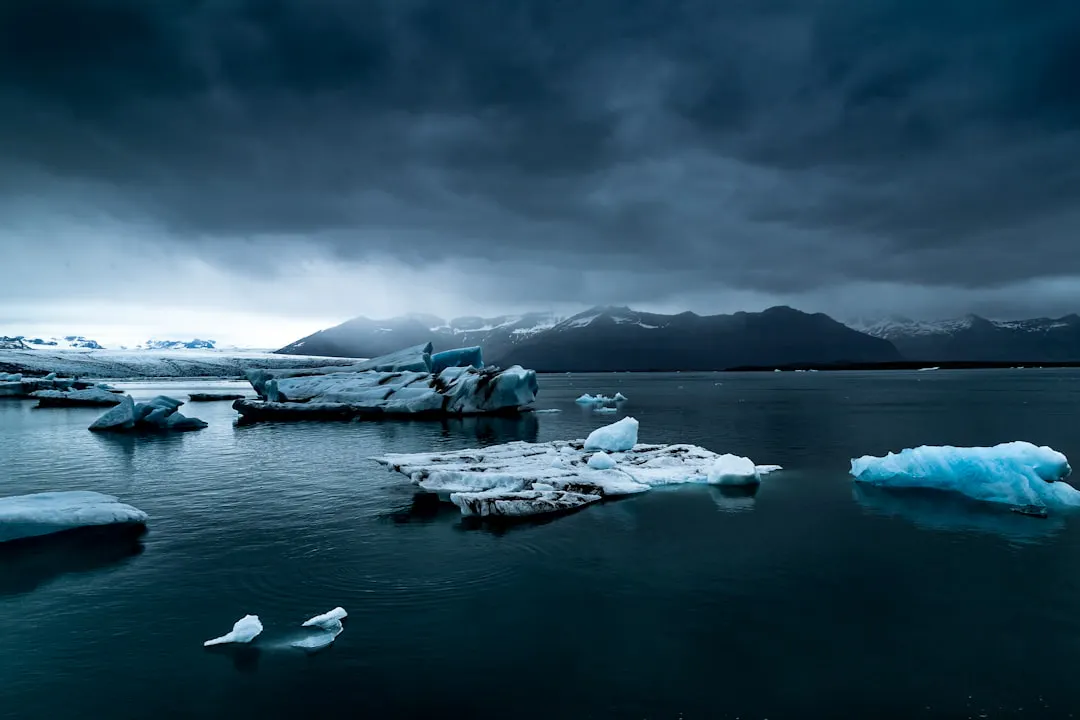
Look, I know not everyone wants to drive in Iceland at midnight in late August when there may or may not be sheep on the road and you are running on three hours of sleep and aurora excitement. That is fair. The sheep are a real variable.
The organised aurora tours from Reykjavík are a legitimate option, and I say that as someone who takes some pride in doing things independently. The practical advantage of a guided tour is that the guide is tracking the forecast constantly and knows where to drive to get ahead of the cloud cover. Iceland's weather is hyper-local. A layer of cloud sitting over Þingvellir might not extend to Hvalfjörður twenty minutes north, and knowing which way to move in real time is genuinely valuable. We run an aurora hunting tour from Reykjavík that operates on exactly this logic — small groups, a guide who is actually watching the forecast all evening, and the flexibility to change location if the first spot clouds over. You can check it on the QR Travel aurora tours page.
The tours that leave at nine or ten pm and are back by midnight are, in my experience, too short. The best aurora activity in late August tends to come later. Look for tours that run until at least one or two in the morning and confirm that the guide will actually change location if conditions are not working.
What Your Camera Is Going To Do (And What It Is Not)
Modern smartphones, particularly anything from the last two or three years, have night modes that can capture aurora reasonably well. I am not going to tell you to bring a professional DSLR or your holiday is ruined. But I will tell you what the camera will not do: it will not capture what your eyes see in real time. The movement, the way it suddenly accelerates and then collapses — that does not sit still for a photograph. Watch it first. Take the photo second. People who spend an entire aurora display looking at a screen instead of a sky are making a choice I genuinely do not understand.
For anyone who wants to work on aurora photography properly, a wide-angle lens, a sturdy tripod, and manual settings are the starting point. Exposure somewhere around eight to fifteen seconds at a wide aperture and a high ISO is a common starting point, but conditions vary enormously. The aurora photography workshops we occasionally attach to our multi-day glacier and south coast tours go through this in detail if you want guided instruction in the field rather than a YouTube tutorial watched in your hotel room.
Pro Tip: Shoot in RAW if your camera allows it. The difference in what you can recover in post-processing compared to a JPEG is significant, especially in the blue and green tones that dominate aurora images.
The Part Where Everything Goes Wrong and You Go Anyway
I want to be honest about something. I have been out on aurora hunts where the forecast was genuinely exciting — KP-5, low cloud cover predicted, all of it — and sat in a car park in complete overcast for two hours seeing nothing. I have also gone out on a mediocre forecast on a whim and had the kind of night that is hard to explain to people who were not there.
Late August aurora chasing in Iceland is inherently uncertain. What you can control is your preparation: check vedur.is obsessively, have a car or a good tour booked, dress properly, and stay out later than feels reasonable. What you cannot control is the atmosphere, either the solar one or the Icelandic one.
The solar maximum will not last. Solar Cycle 25 will peak and begin declining, and quieter aurora seasons will follow. The window right now, this late summer and into the autumn of 2026, is genuinely unusual in terms of how active conditions have been. I am not saying that to manufacture urgency. I am saying it because it is true and because I have seen what a strong geomagnetic storm looks like from a dark hillside in the Westfjords, and I would rather you see it than miss it because you did not know.
If you want to sort out a tour, a glacier day trip to pair with your aurora nights, or just figure out the south coast route properly, the QR Travel booking platform has the itineraries and the dates. Come find the dark with us.

