Skógafoss & Seljalandsfoss: Iceland's Waterfall Icons
Published
Two epic waterfalls, one unforgettable road trip. Here's everything you need to know before visiting Skógafoss and Seljalandsfoss on Iceland's South Coast.

There's a moment — somewhere between pulling off the Ring Road and catching your first glimpse of a wall of white water thundering down from a cliff edge — when Iceland stops feeling real. That moment, for most visitors, happens at either Skógafoss or Seljalandsfoss. I've stood at both, soaking wet, grinning like an idiot, and I can tell you without hesitation: these two waterfalls are worth every kilometre of the drive.
Both falls sit along Iceland's South Coast, an easy 1.5 to 2-hour drive from Reykjavík along Route 1, also known as the Hringvegur (Ring Road). They're close enough to visit on the same day — which most people do — but distinct enough in character that they each deserve your full attention. Here's everything you need to know to make the most of them.
Seljalandsfoss: The One You Can Walk Behind
Seljalandsfoss is the showstopper opener. Dropping 60 metres from the cliffs of the former coastline (yes, the sea once reached here), it's the waterfall you've almost certainly seen in a hundred Iceland photos. What those photos often don't capture is the trail that curves around behind the curtain of falling water — and that changes everything.
Walking behind Seljalandsfoss is genuinely one of those travel experiences that earns the word 'magical.' The roar is immense, the mist soaks you in seconds, and looking out through the cascade at the green valley beyond feels like peering through a living painting. Wear waterproof gear — I cannot stress this enough. I made the rookie mistake of wearing a regular jacket my first time and spent the next hour shivering next to a parking lot vending machine selling overpriced hot chocolate. Learn from me.
The trail itself is well-maintained gravel but can be extremely icy in winter and early spring. During those months, the path behind the falls is often closed for safety — so if you're visiting between November and March, check conditions before you go and don't be tempted to ignore the closure signs. Crampons (broddar in Icelandic) are a smart addition to your packing list for a winter trip to the South Coast regardless.
Related experiences


Don't Miss Gljúfrabúi Next Door
About 500 metres north of Seljalandsfoss, hidden inside a narrow canyon, is one of Iceland's best-kept semi-secrets: Gljúfrabúi. Most visitors walk straight past it. To reach it, you wade through a shallow stream into a slot canyon — and inside, a 40-metre waterfall drops into a dramatic stone chamber. It feels like discovering a hidden world. Wear waterproof boots. Seriously.
Skógafoss: Big, Bold, and Worth the Climb
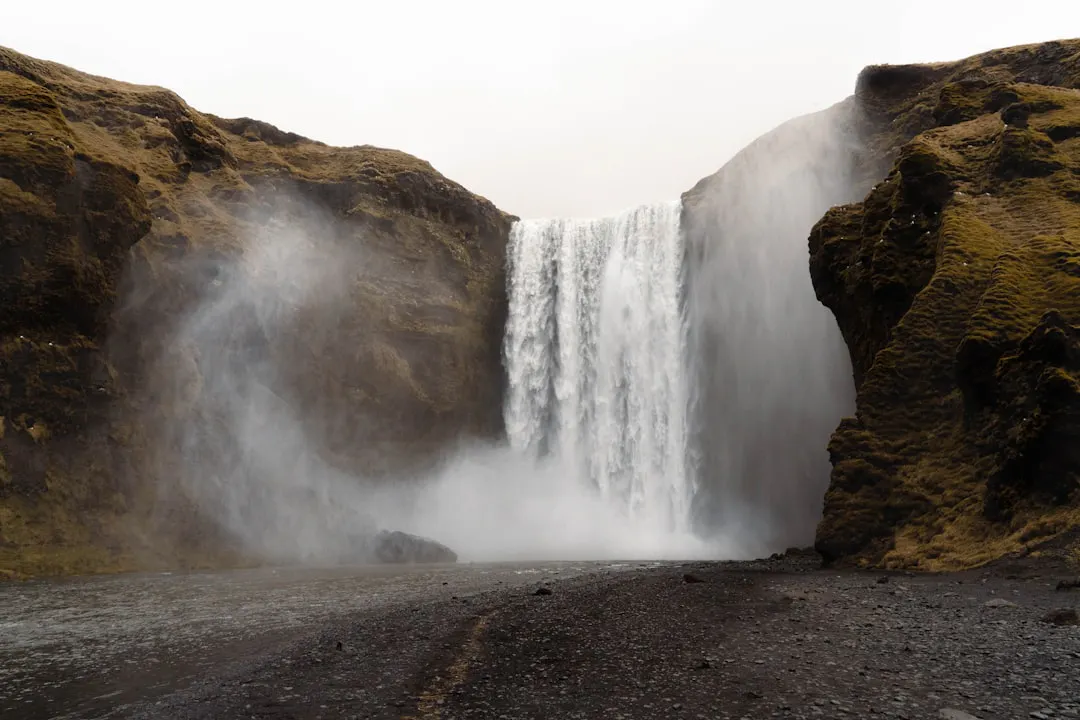
Drive another 30 kilometres east along Route 1 and you'll reach Skógafoss — 25 metres wide and dropping 60 metres in a single, thunderous plunge. Unlike Seljalandsfoss, you can walk right up to the base of Skógafoss on a flat, well-paved path. The rainbow that forms in the mist on sunny days is the stuff of travel legend, and on the right morning it genuinely lives up to the hype. 🌈
But Skógafoss has something else up its sleeve: the staircase. On the eastern side of the falls, 527 wooden steps climb to the top of the cliffs, where the Skógá river stretches inland toward the Eyjafjallajökull glacier (yes, that one — the one that grounded European flights in 2010). The view from the top is extraordinary, and if you've got the legs for it, you can follow the Fimmvörðuháls hiking trail inland for as long as you like. On clear days, the panorama of the South Coast — farmland, black sand plains, glacier tongues — is simply breathtaking.
Practical Tips for Skógafoss
Arrive early. Skógafoss is one of the most visited natural attractions in Iceland, and by mid-morning the car park fills up fast. Aim to be there by 8am if you're visiting in summer. There's a campsite right at the falls (Skógar Campsite) which is popular with hikers tackling Fimmvörðuháls, and the small Skógar Museum nearby is a surprisingly worthwhile stop if you want context on traditional Icelandic turf houses and rural life.
Making a Full South Coast Day of It
Here's the thing: Skógafoss and Seljalandsfoss are just the beginning of what Iceland's South Coast has to offer. If you're already out this way, it would be a genuine shame not to extend the adventure. From Skógafoss, it's only another 30 minutes east to Reynisfjara, the famous black sand beach with its basalt columns and sea stacks, and a short drive beyond that brings you to the village of Vík í Mýrdal.
Further east still, the Vatnajökull glacier — Europe's largest — dominates the horizon, and this is where Iceland's most dramatic bucket-list experiences come into play. Glacier hikes on Sólheimajökull (accessible as a day trip from Reykjavík) are bookable year-round and give you crampons-on-ice access to a living, moving glacier. Ice cave tours inside Katla or into the crystal blue caves of Vatnajökull are among the most surreal experiences on the planet — and are only possible with a certified guide, so booking in advance through a reputable operator like QRTours is essential.
If you're visiting in winter, a Northern Lights tour along the South Coast gives you some of the best aurora viewing in the country, away from Reykjavík's light pollution with the silhouette of glaciers and volcanic ridges framing the sky above you. Summer visitors, meanwhile, should look into a whale watching tour out of Reykjavík or Húsavík on the North Coast — it pairs perfectly with a multi-day Ring Road itinerary.
When to Visit and What to Pack
Both waterfalls are accessible year-round, but the experience changes dramatically with the seasons. Summer (June to August) offers long daylight hours — up to 24 hours of light at the peak — lush green surroundings, and the easiest conditions underfoot. Winter (November to March) wraps the falls in frost and occasional ice formations, and the low light makes for extraordinary photography, but conditions require more preparation.
Whatever time of year you visit, pack waterproof outer layers, sturdy footwear with ankle support, and an extra layer you don't mind getting wet. A wide-angle lens if you're a photographer. Snacks, because the café options near the falls are limited and the nearest town with real food options is Hvolsvöllur to the west or Vík to the east.
Skógafoss and Seljalandsfoss aren't just photo opportunities — they're the kind of places that recalibrate your sense of scale and remind you how genuinely wild this planet still is. Put them at the top of your Iceland itinerary, book your South Coast activities early, and go get soaked. You'll thank yourself later.

